Original Artwork

$650.00

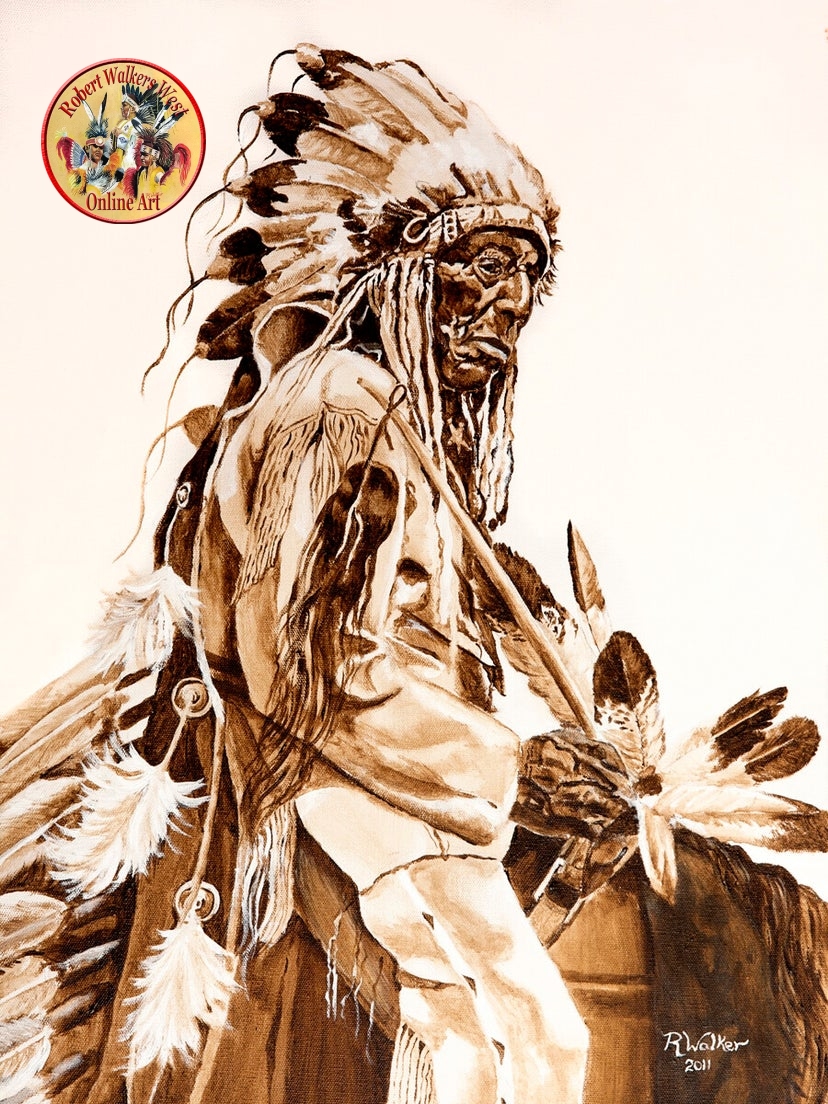
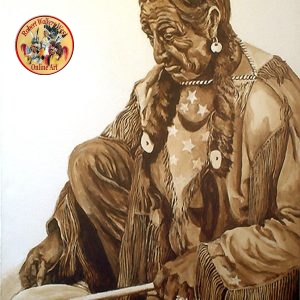
“Cheyenne Elder”

Cheyenne Elder
Between 1900 and 1930, Edward Curtis traveled deep into Indian territories and lived among dozens of Native tribes. He captured the authentic ways of life of over 80 Native cultures. One of his photographs was the reference for this acrylic mono-color. I see this old man, thinking that his way of life that he knew in his early life was gone forever, and would never return.
The size of this original is painted on a 16X20X1 stretched canvas. It is a mono-color using only raw umber acrylic paint
International Shipping: If you are outside the U.S., please contact us directly for a shipping quote.

1 in stock

Category:
Description

Description

Cheyenne Elder
Between 1900 and 1930, Edward Curtis traveled deep into Indian territories and lived among dozens of Native tribes. He captured the authentic ways of life of over 80 Native cultures. One of his photographs was the reference for this acrylic mono-color. I see this old man, thinking that his way of life that he knew in his early life was gone forever, and would never return.
The size of this original is painted on a 16X20X1 stretched canvas. It is a mono-color using only raw umber acrylic paint
Reviews (0)

Reviews

There are no reviews yet.

Be the first to review ““Cheyenne Elder””

Your email address will not be published. Required fields are marked *

More Products

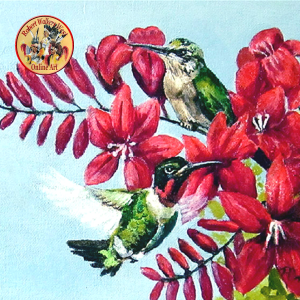
“Hummingbird Pair”

$125.00

Ruby Throats
This is “Ruby Throats”. It’s an original acrylic painting on an 8 X 10 canvas panel, and is designed to fit any standard 8 X 10 frame. If you have a “Gallery Wall” in your home, this would be a great addition to it

This product has multiple variants. The options may be chosen on the product page

“Final Approach”

Final Approach
This is a pair of Sandhill Cranes coming in on the “Final Approach” for a landing. This original pencil drawing is 15X15 inches and is drawn on archival paper. The size of the framed piece is 22X24 inches The pencil drawing has been double matted in grays, and backed with Foam-core. It is framed in black metal, and covered in non-glare glass.

This product has multiple variants. The options may be chosen on the product page

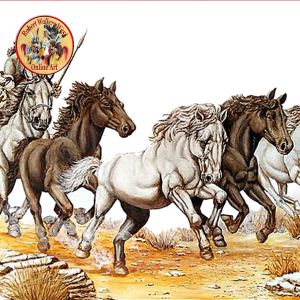
“Counting Coupe”

$750.00

“Counting Coupe”
Among the Plains Indians of North America, counting coup involved the winning of prestige against an enemy. Native American warriors won prestige by acts of bravery in the face of the enemy, which could be recorded in various ways and retold as stories. Any blow struck against the enemy counted as a coup, but the most prestigious acts included touching an enemy warrior with a hand, bow, or coup stick.
Counting coup could also involve stealing an enemy’s horses tied up to his lodge in camp. Risk of injury or death was required to count coup. Escaping unharmed while counting coup was considered a higher honor than being wounded in the attempt.
After a battle or exploit, the people of a band would gather together to recount their acts of bravery and “count coup”.

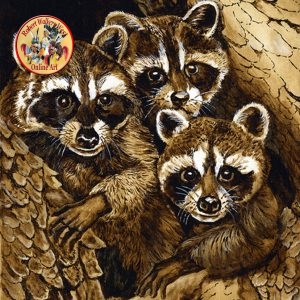
“The Baby Bunch” Original Acrylic Painting on 16X20 Gallery-Wrapped Canvas

$450.00

Baby Bunch SKU-AN02
Many years ago, when I was young, (That was just shortly before they invented Dirt.) I lived in the back country, and spent a good deal of my time in the woods with a camera. On one of my forays, I ran across a litter of raccoons waiting for mama to return home to feed them. Apparently she had been delayed for quite some time, and the young coons were not happy about it. As a matter of fact that is how I found them in the first place because they were raising quite a commotion, and I heard them before I saw them.Description:This is an acrylic painting on a 16X20 gallery wrapped canvas. The great part is that the painting is an original, and this means it is a “One-of-a-Kind”. No one else can get one.
$450

“Nampeyo” The Potter

$650.00

Nampeyo (1859 –1942) was a Hopi-Tewa potter who lived on the Hopi Reservation in Arizona. Her Tewa name was also spelled Num-pa-yu, meaning “snake that does not bite”.She used ancient techniques for making and firing pottery and used designs from “Old Hopi” pottery and sherds found at 15th-century Sikyátki ruins on First Mesa.A world record for Southwest American Indian pottery was declared at Bonhams Auction House in San Francisco on December 6, 2010, when one of Nampeyo’s art works, a decorated ceramic pot, sold for $350,000.
This monocolor is an acrylic painting on a 16X20 gallery-wrapped canvas.

“Pucksinewah” (Shawnee War Chief) 15298823

$1,500.00

Puckshinwa “Shawnee War Chief”
Puckshinwa, meaning “alights from flying”, was a Shawnee War Chief of the Kispoko during Pontiac’s Rebellion.
Pucksinewah was father to Tecumseh, a Shawnee chief and warrior who promoted resistance to the expansion of the United States onto Native American lands. A persuasive orator, Tecumseh traveled widely, forming a Native American Confederacy and promoting intertribal unity. Even though his efforts to unite Native Americans ended with his death in the War of 1812, he became an iconic folk hero in American, Indigenous, and Canadian popular history.
Puckshinwa “Shawnee War Chief”
Puckshinwa, meaning “alights from flying”, was a Shawnee War Chief of the Kispoko during Pontiac’s Rebellion.
Pucksinewah was father to Tecumseh, a Shawnee chief and warrior who promoted resistance to the expansion of the United States onto Native American lands. A persuasive orator, Tecumseh traveled widely, forming a Native American Confederacy and promoting intertribal unity. Even though his efforts to unite Native Americans ended with his death in the War of 1812, he became an iconic folk hero in American, Indigenous, and Canadian popular history.