Original Artwork

$650.00

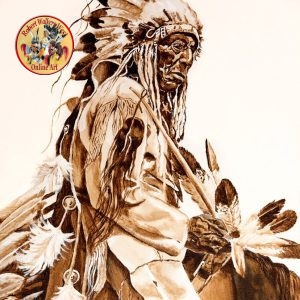
“Geronimo’ Apache Ghief

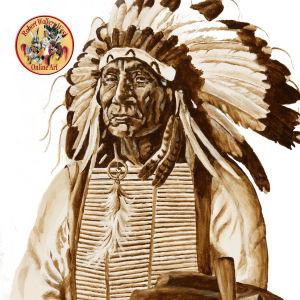
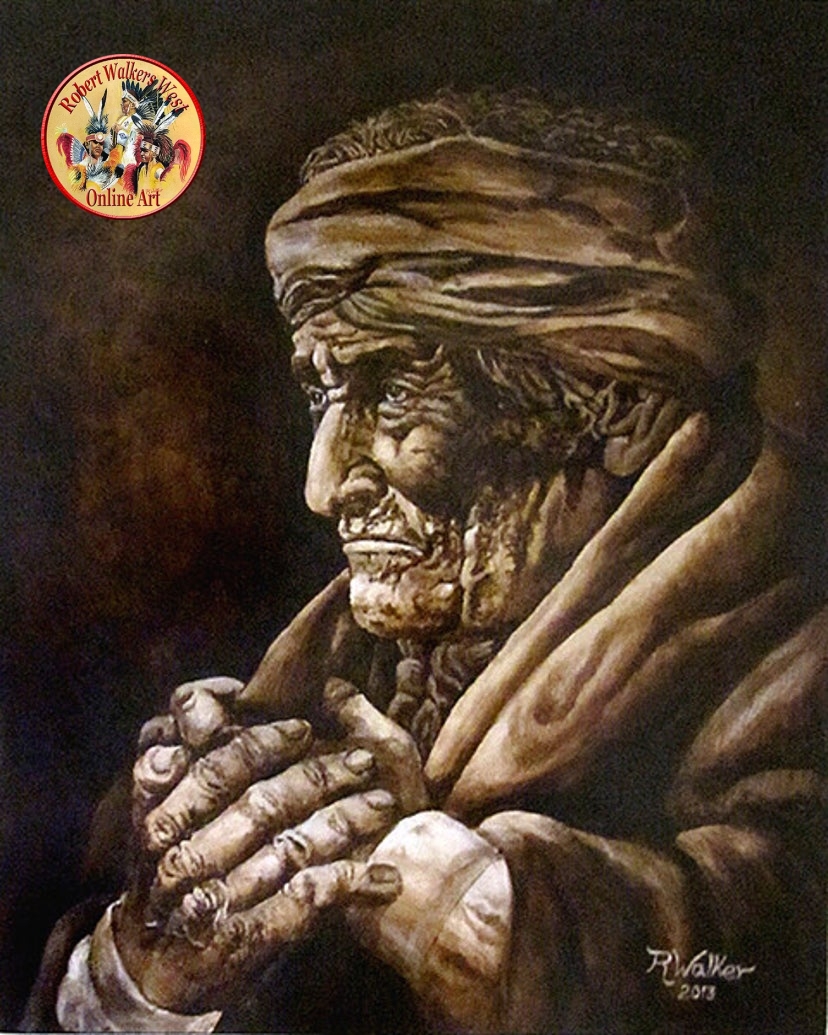
Geronimo was a Bedonkohe Apache leader of the Chiricahua Apache, who led his people’s defense of their homeland against the military might of the United States.
“Geronimo”
Geronimo was an Apache leader who continued the tradition of the Apaches resisting white colonization of their homeland in the Southwest, participating in raids into Sonora and Chihuahua in Mexico. After years of war, Geronimo finally surrendered to U.S. troops in 1886. While he became a celebrity, he spent the last two decades of his life as a prisoner of war.
This 16 X 20 mono-color painting is of Geronimo in his last years, maybe thinking of his days in Arizona, fighting for his tribal lands.
International Shipping: If you are outside the U.S., please contact us directly for a shipping quote.

Category:
Description

Description

Geronimo was a Bedonkohe Apache leader of the Chiricahua Apache, who led his people’s defense of their homeland against the military might of the United States.
“Geronimo”
Geronimo was an Apache leader who continued the tradition of the Apaches resisting white colonization of their homeland in the Southwest, participating in raids into Sonora and Chihuahua in Mexico. After years of war, Geronimo finally surrendered to U.S. troops in 1886. While he became a celebrity, he spent the last two decades of his life as a prisoner of war.
This 16 X 20 mono-color painting is of Geronimo in his last years, maybe thinking of his days in Arizona, fighting for his tribal lands.
Reviews (0)

Reviews

There are no reviews yet.

Be the first to review ““Geronimo’ Apache Ghief”

Your email address will not be published. Required fields are marked *

More Products

“To the Victor Go the Sorrels”

$550.00

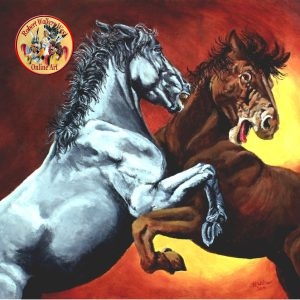
“To the Victor Go the Sorrels”
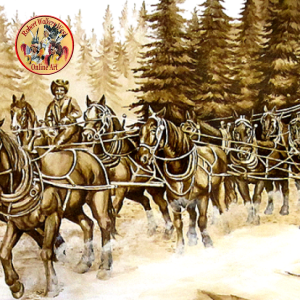
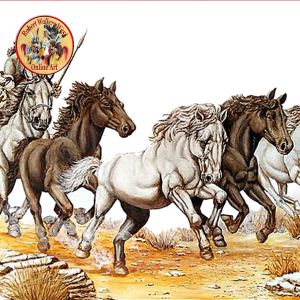
Each herd typically has a dominant stallion referred to as the “herd stallion” and a few other less dominant stallions. Interestingly, each herd is led not by the dominant stallion but by a dominant mare. This is similar to the way we humans do things.
This original acrylic painting by Robert Walker is on a 16X20 gallery-wrapped canvas.

“The Last Hunt”

$1,250.00

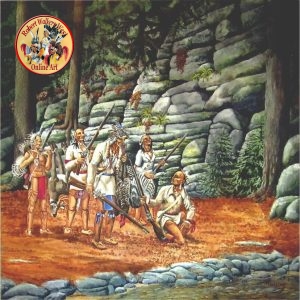
The Last Hunt
Upon arriving in the Ohio Country, the Delaware Tribes formed alliances with Frenchmen engaged in the fur trade. The French provided the natives with European cookware and guns, as well as alcohol, in return for furs. The French and British colonists struggled for control of the Ohio Country beginning in the 1740s, and as the British gained control of the Ohio Country, the Delawares chose to ally themselves with the stronger party. This was the case until the French abandoned all of their North American colonies to Britain. The Delawares thereafter remained loyal to the British and the American colonists until the American Revolution.
“The Last Hunt” depicts a hunting party of Delaware Indians in their final days before they were displaced to the Oklahoma Territory. The old chief and his party are having a good hunt in what is now the Mohican State Park in Ohio. It will be their “Last Hunt before their way of life changes forever.
This acrylic painting is on a 36 X 36 X 1 gallery-wrapped canvas, and may be hung without framing.

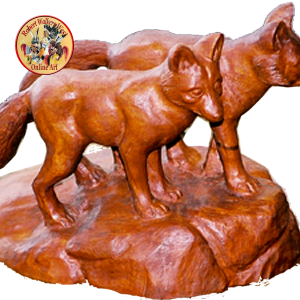
“Fox Cubs”

$150.00

Back in the late nineties, I was into wood carving, “Big Time”!!! “Fox Cubs” is one of a very few carvings that still remain in inventory. It is carved from the wood that “The Chase” was. This might be your last chance to purchase a Robert Walker original wood carving.

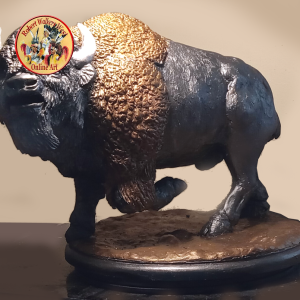
“Bison Bull with an Attitude”

$450.00

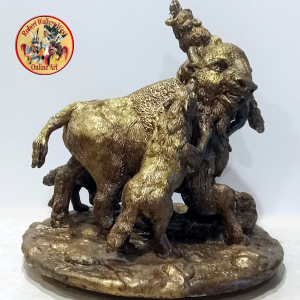
After the Civil War, buffalo killing went into high gear.
The combination of guns, railroads, commercial activity, and war between European settlers and American Indians proved deadly to the species. There was a huge market for buffalo skins and hides in the Northeast United States and Europe. A good buffalo skin would sell for $3 in Kansas, and a finished buffalo-hide winter coat would sell for $50. Buffalo leather was also well suited and in high demand for the belts used in pulleys and for steam engines in factories of the time.
Given the scope of this carnage, some hunters, including Buffalo Bill Cody, spoke out in favor of protecting the bison, but President Ulysses S. Grant refused to sign legislation to that effect. The U.S. Army encouraged the excessive killing of buffalo as a way of eliminating food supplies for Indian communities, enabling them to starve Indians off their land and onto reservations.
In the spring of 1886, a taxidermist from the Smithsonian, Hornaday, and his team, headed to Montana to collect specimens for the museum. Hornaday was stunned to find no live buffalo on the plains, only thousands of skeletons bleaching in the sun. The impact of killing some of the last buffalo was not lost on Hornaday, and he began to think about how to save the species.
The conservation of the bison had begun.

This is a polymer clay sculpture. It has been painted to a Faux Bronze finish. It is on a 12 inch circular wooden base. The overall dimensions are 18 X 12 X 12 inches.

“The Healing”

$750.00

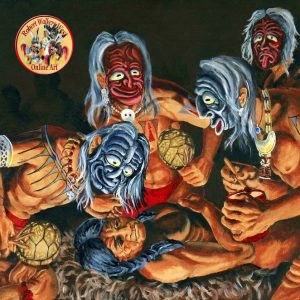
The Healing
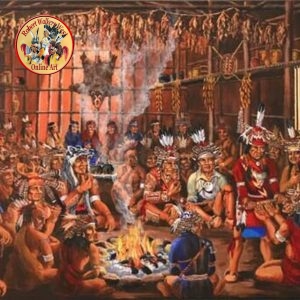
The False Face Society is probably the best known of the medicinal societies among the Iroquois, especially for its dramatic wooden masks. The masks are used in healing rituals which invoke the spirit of an old hunch-backed man. Those cured by the society become members. Also, echoing the significance of dreams to the Iroquois, anyone who dreams that they should be a member of the society may join.
The size of the original is 16X20 and is painted on a stretched canvas.

“Cheyenne Elder”

$650.00

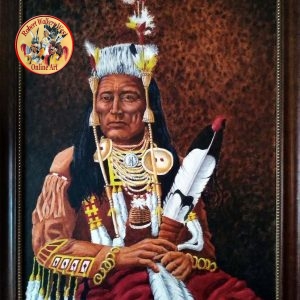
Cheyenne Elder
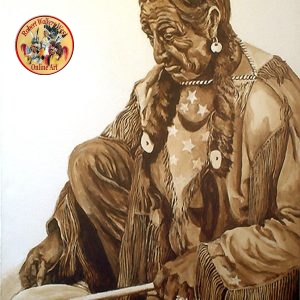
Between 1900 and 1930, Edward Curtis traveled deep into Indian territories and lived among dozens of Native tribes. He captured the authentic ways of life of over 80 Native cultures. One of his photographs was the reference for this acrylic mono-color. I see this old man, thinking that his way of life that he knew in his early life was gone forever, and would never return.
The size of this original is painted on a 16X20X1 stretched canvas. It is a mono-color using only raw umber acrylic paint