
Original Artwork

$650.00

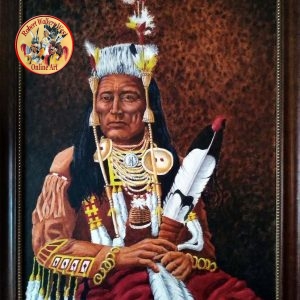
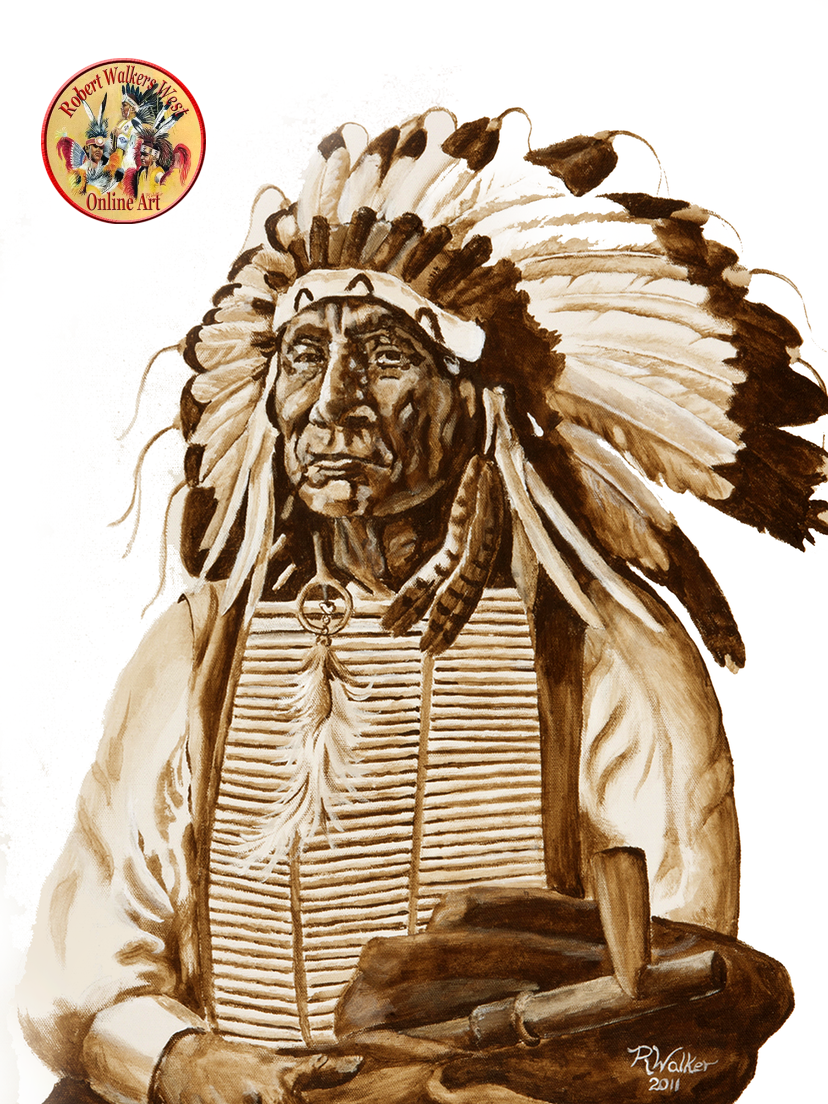
“Red Cloud” (Lakota Chief)

Red Cloud (Lakota: Maȟpíya Lúta) (born 1822 – December 10, 1909) was one of the most important leaders of the Oglala Lakota from 1868 to 1909. He was one of the most capable Native American opponents that the United States Army faced in its mission to occupy the western territories, defeating the United States during Red Cloud’s War, which was a fight over control of the Powder River Country in northeastern Wyoming and southern Montana. The largest action of the war was the Fetterman Fight, with 81 U.S soldiers killed, and was the worst military defeat suffered by the United States Army on the Great Plains until the Battle of the Little Bighorn ten years later.
After signing the Treaty of Fort Laramie (1868), Red Cloud led his people in the important transition to reservation life.
This original acrylic painting is on an 18 X 24 gallery-wrapped canvas, and is a Raw Umber Mono-color.
International Shipping: If you are outside the U.S., please contact us directly for a shipping quote.

1 in stock

Category:
Description

Description

Red Cloud (Lakota: Maȟpíya Lúta) (born 1822 – December 10, 1909) was one of the most important leaders of the Oglala Lakota from 1868 to 1909. He was one of the most capable Native American opponents that the United States Army faced in its mission to occupy the western territories, defeating the United States during Red Cloud’s War, which was a fight over control of the Powder River Country in northeastern Wyoming and southern Montana. The largest action of the war was the Fetterman Fight, with 81 U.S soldiers killed, and was the worst military defeat suffered by the United States Army on the Great Plains until the Battle of the Little Bighorn ten years later.
After signing the Treaty of Fort Laramie (1868), Red Cloud led his people in the important transition to reservation life.
This original acrylic painting is on an 18 X 24 gallery-wrapped canvas, and is a Raw Umber Mono-color.

Reviews (0)

Reviews

There are no reviews yet.

Be the first to review ““Red Cloud” (Lakota Chief)”

Your email address will not be published. Required fields are marked *

More Products

“Cheyenne Elder”

$650.00

Cheyenne Elder
Between 1900 and 1930, Edward Curtis traveled deep into Indian territories and lived among dozens of Native tribes. He captured the authentic ways of life of over 80 Native cultures. One of his photographs was the reference for this acrylic mono-color. I see this old man, thinking that his way of life that he knew in his early life was gone forever, and would never return.
The size of this original is painted on a 16X20X1 stretched canvas. It is a mono-color using only raw umber acrylic paint

“The Baby Bunch” Original Acrylic Painting on 16X20 Gallery-Wrapped Canvas

$450.00

Baby Bunch SKU-AN02
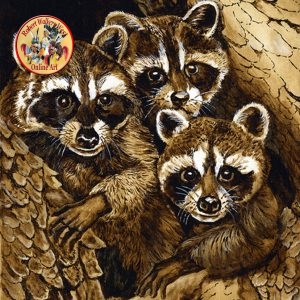
Many years ago, when I was young, (That was just shortly before they invented Dirt.) I lived in the back country, and spent a good deal of my time in the woods with a camera. On one of my forays, I ran across a litter of raccoons waiting for mama to return home to feed them. Apparently she had been delayed for quite some time, and the young coons were not happy about it. As a matter of fact that is how I found them in the first place because they were raising quite a commotion, and I heard them before I saw them.Description:This is an acrylic painting on a 16X20 gallery wrapped canvas. The great part is that the painting is an original, and this means it is a “One-of-a-Kind”. No one else can get one.
$450

“Majestic Encounter: Cheyenne Warrior and Bison”

$1,500.00

Majestic Encounter: Cheyenne Warrior and Bison
Immerse yourself in the rich heritage and relentless spirit of the Great Plains with this stunning wall hanging sculpture. Capturing a pivotal moment in the life of the Cheyenne people, this piece features a valiant Cheyenne warrior astride a powerful horse, poised to bring down a mighty bison. The intricate details and dynamic composition vividly portray the warrior’s unwavering determination and skill as he hunts to secure vital provisions for the tribe’s winter sustenance. This artwork is not just a depiction of a hunt; it’s a tribute to the resilience, bravery, and timeless traditions of the Cheyenne Nation. A compelling addition to any collection, this sculpture invites you to witness the raw energy and profound connection between man, animal, and the land they both call home.
This is an original sculpture of a Cheyenne Warrior on horseback, about to bring down a running bison. The piece is done in two-part epoxy and is designed as a wall hanging.

“Catch of the Day”

$650.00

“Catch of the Day”
The American Bald Eagle (Haliaeetus leucocephalus) is a majestic bird of prey and the national symbol of the United States. Known for its striking white head and tail feathers, the bald eagle is a powerful and skilled hunter, particularly adept at fishing.
Bald eagles have eyesight that is four to eight times sharper than that of humans. This incredible vision allows them to spot fish swimming beneath the water’s surface from great heights.
Bald eagles often hunt by soaring high above water bodies, scanning for fish. Once they spot a target, they dive at high speeds, extending their talons forward to grab the fish just below the water’s surface.
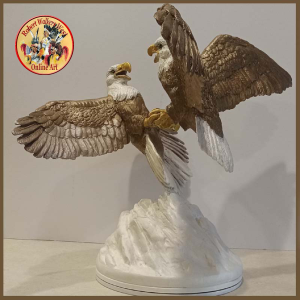
This sculpture is of a Bald Eagle at the moment it snatches a fish from the water.
The piece is the original and sculpted in two-part epoxy, is approximately 16 inches high with a radius of 14 inches, and has a built in turntable so it can be rotated without sliding it on your furnature.

“Peregrine”

$300.00

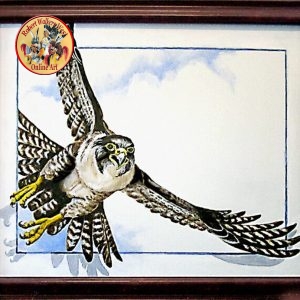
I created this original acrylic painting several years ago, just to see if I could. It is a Peregrine Falcon that uses the Trompe’ style that creates the illusion that it is flying out of its’ frame. I’m not sure how successful I was, but here it is.
This is an acrylic painting on a gallery-wrapped 16X20 canvas. It has been framed, but perhaps it might be better if the frame was removed and hung as it is.

“Ghost Drums”

$750.00

Ghost Drums
The basis for the Ghost Dance is the circle dance, a traditional dance done by many Native Americans. The Ghost Dance was first practiced by the Nevada Northern Paiute in 1889. The practice swept throughout much of the Western United States, quickly reaching areas of California and Oklahoma. As the Ghost Dance spread from its original source, different tribes synthesized selective aspects of the ritual with their own beliefs.
The Ghost Dance was associate(Wovoka’s) prophecy of an end to white expansion while preaching goals of clean living, an honest life, and cross-cultural cooperation by Indians. Practice of the Ghost Dance movement was believed to have contributed to Lakota resistance to assimilation under the Dawes Act.