Original Artwork

$750.00

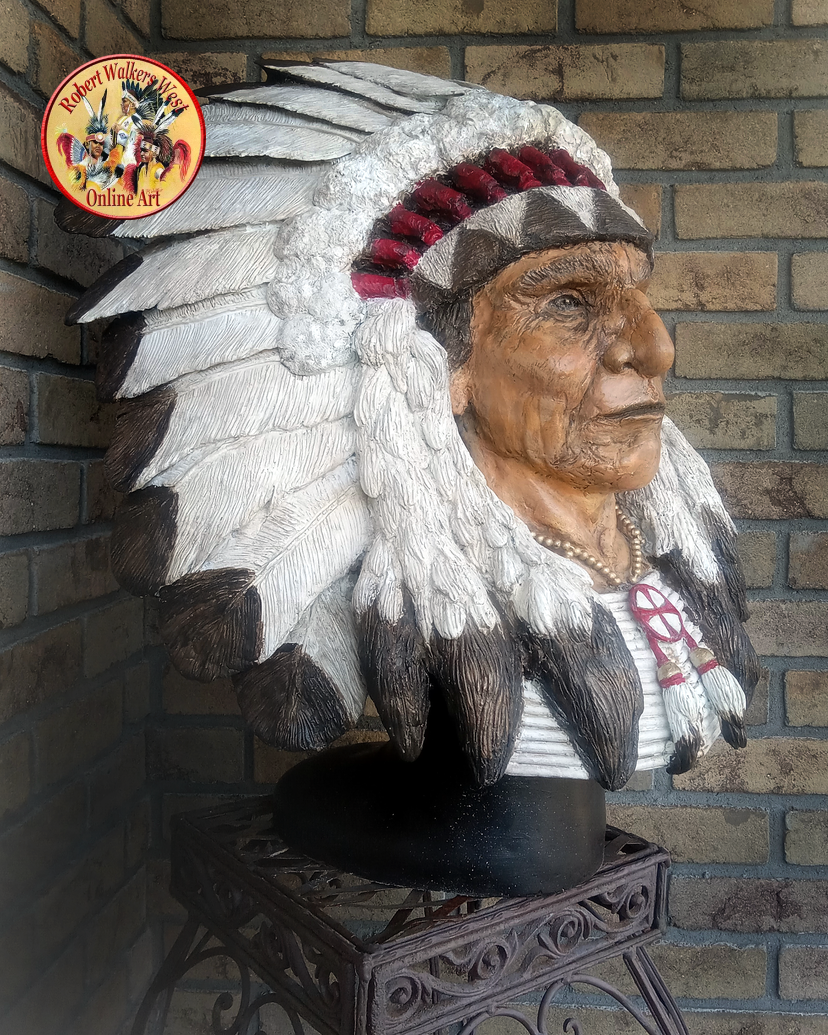
“Red Cloud” (Lakota Chief)

“The tribes of the Dakota before European contact in the 1600 lived in the region around Lake Superior. In this forest environment, they lived by hunting, fishing, and gathering wild rice. They also grew some corn, but their locale was near the limit of where corn could be grown.”
European expansion in the east pushed the Lakota west onto the Great Plains in the mid- to late-17th century.
This is when the Lakota began to domesticate the horse which was a major change to the way they defined themselves. They became more nomadic as they followed the great bison herds that roamed the Great plains
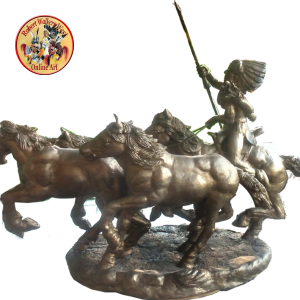
This sculpture is of a Lakota Chief, is made of polymer clays and the overall size is 23 X 16 X 16.
International Shipping: If you are outside the U.S., please contact us directly for a shipping quote.

1 in stock

Category:
Description

Description

“The tribes of the Dakota before European contact in the 1600 lived in the region around Lake Superior. In this forest environment, they lived by hunting, fishing, and gathering wild rice. They also grew some corn, but their locale was near the limit of where corn could be grown.”
European expansion in the east pushed the Lakota west onto the Great Plains in the mid- to late-17th century.
This is when the Lakota began to domesticate the horse which was a major change to the way they defined themselves. They became more nomadic as they followed the great bison herds that roamed the Great plains
This sculpture is of a Lakota Chief, is made of polymer clays and the overall size is 23 X 16 X 16.
Reviews (0)

Reviews

There are no reviews yet.

Be the first to review ““Red Cloud” (Lakota Chief)”

Your email address will not be published. Required fields are marked *

More Products

“Cart Wheels”

$950.00

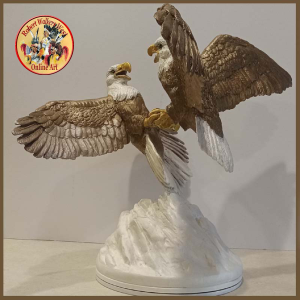
Scientists don’t know what characteristics bald eagles look for in potential mates or how the birds assess each other’s reproductive potential.
It’s known, however, that bald eagle pairs engage in a number of courtship rituals as they build their bond.
The most famous and recognizable of these rituals is the “cartwheel courtship flight,” in which two bald eagles will fly up high, lock talons and then get into a cartwheel spin as they fall toward the ground, breaking apart at the last minute.
This piece is sculpted in two-part epoxy, is approximately 18 inches tall, and its radius is 19 inches. It has a turntable built into it so that it can be rotated easily.

“Bull Bison”

$450.00

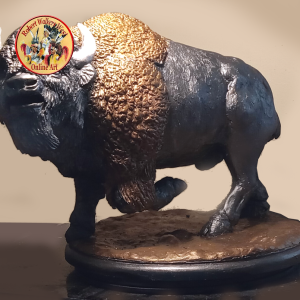
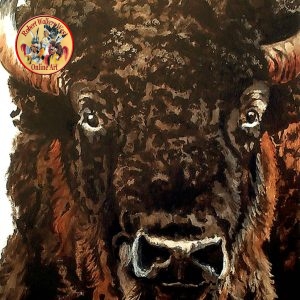
Bison Bull SKU-AN04Truth be told; I had a blank canvas and no clear direction when I painted this. Having said that- – – – Here it is!!!
Description:This is an acrylic painting on a 16X20 gallery wrapped canvas. The great part is that the painting is an original, and this means it is a “One-of-a-Kind”. No one else can get one.$450

“One Damn Thing After Another”

$450.00

“One Damn Thing After Another”
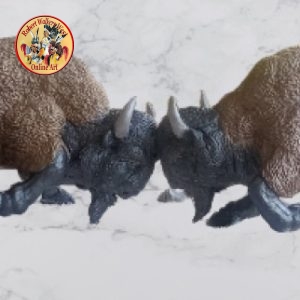
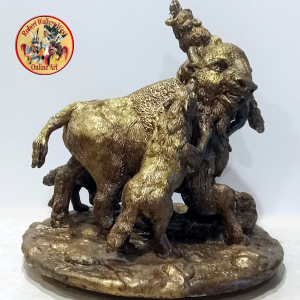
In Yellowstone National Park, Wolves are more successful killing elk than bison. However, in late winter when bison were vulnerable because of poor condition or of bison that were injured or young, wolves learned to kill bison.
In this sculpture, considering the wolf being trampled, and the one being gored, it would appear that the outcome is far from certain.

“Owl Eyes”

$125.00

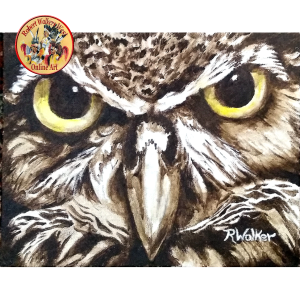
“Owl Eyes” is an 8 X 10 inch acrylic mono-color painting on a canvas board. This again is one of many paintings that I do to fill in between major projects. If you have a “Gallery Wall” in your home, this would be a great addition to it.

“To the Victor Go the Sorrels”

$550.00

“To the Victor Go the Sorrels”
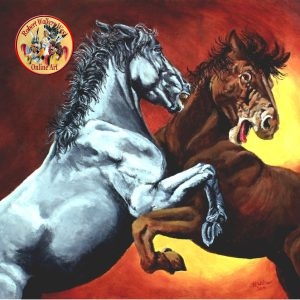
Each herd typically has a dominant stallion referred to as the “herd stallion” and a few other less dominant stallions. Interestingly, each herd is led not by the dominant stallion but by a dominant mare. This is similar to the way we humans do things.
This original acrylic painting by Robert Walker is on a 16X20 gallery-wrapped canvas.

“Pucksinewah” (Shawnee War Chief) 15298823

$1,500.00

Puckshinwa “Shawnee War Chief”
Puckshinwa, meaning “alights from flying”, was a Shawnee War Chief of the Kispoko during Pontiac’s Rebellion.
Pucksinewah was father to Tecumseh, a Shawnee chief and warrior who promoted resistance to the expansion of the United States onto Native American lands. A persuasive orator, Tecumseh traveled widely, forming a Native American Confederacy and promoting intertribal unity. Even though his efforts to unite Native Americans ended with his death in the War of 1812, he became an iconic folk hero in American, Indigenous, and Canadian popular history.
Puckshinwa “Shawnee War Chief”
Puckshinwa, meaning “alights from flying”, was a Shawnee War Chief of the Kispoko during Pontiac’s Rebellion.
Pucksinewah was father to Tecumseh, a Shawnee chief and warrior who promoted resistance to the expansion of the United States onto Native American lands. A persuasive orator, Tecumseh traveled widely, forming a Native American Confederacy and promoting intertribal unity. Even though his efforts to unite Native Americans ended with his death in the War of 1812, he became an iconic folk hero in American, Indigenous, and Canadian popular history.