Original Artwork

$750.00

“Counting Coupe”

“Counting Coupe”

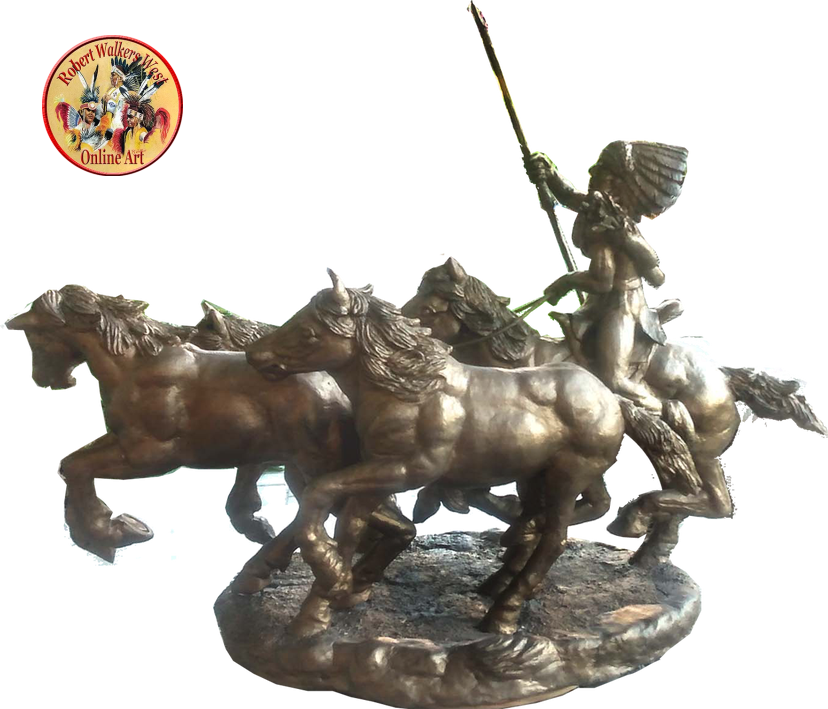
Description:Among the Plains Indians of North America, counting coupe is the warrior tradition of winning prestige against an enemy in battle. It is one of the traditional ways of showing bravery in the face of an enemy and involves intimidating him, and, it is hoped, persuading him to admit defeat, without having to kill him. If the coupe is considered worthy by the tribe elders, the warrior is awarded an “Eagle Feather”.
This Sculpture is of a warrior riding back into camp after stealing four horses. Maybe he will get an “Eagle Feather”.

Historical Context: Among the Plains Indians of North America, “Counting Coup is the warrior tradition of winning prestige against an enemy in battle. It is one of the traditional ways of showing bravery in the face of an enemy and involves intimidating him, and, it is hoped, persuading him to admit defeat, without having to kill him. These victories may then be remembered, recorded, and recounted as part of the community’s oral, written, or pictorial histories.
Medium: Two-part epoxy with a Faux Bronze finish, mounted on a 12-inch circular base that rotates which allows the sculpture to be easily turned.
Dimensions: 18 x 12 x 12 inches.
International Shipping: If you are outside the U.S., please contact us directly for a shipping quote.

1 in stock

Category:
Description

Description

“Counting Coupe”

Description:Among the Plains Indians of North America, counting coupe is the warrior tradition of winning prestige against an enemy in battle. It is one of the traditional ways of showing bravery in the face of an enemy and involves intimidating him, and, it is hoped, persuading him to admit defeat, without having to kill him. If the coupe is considered worthy by the tribe elders, the warrior is awarded an “Eagle Feather”.
This Sculpture is of a warrior riding back into camp after stealing four horses. Maybe he will get an “Eagle Feather”.

Historical Context: Among the Plains Indians of North America, “Counting Coup is the warrior tradition of winning prestige against an enemy in battle. It is one of the traditional ways of showing bravery in the face of an enemy and involves intimidating him, and, it is hoped, persuading him to admit defeat, without having to kill him. These victories may then be remembered, recorded, and recounted as part of the community’s oral, written, or pictorial histories.
Medium: Two-part epoxy with a Faux Bronze finish, mounted on a 12-inch circular base that rotates which allows the sculpture to be easily turned.
Dimensions: 18 x 12 x 12 inches.

Reviews (0)

Reviews

There are no reviews yet.

Be the first to review ““Counting Coupe””

Your email address will not be published. Required fields are marked *

More Products

“Downie Pair”

$125.00

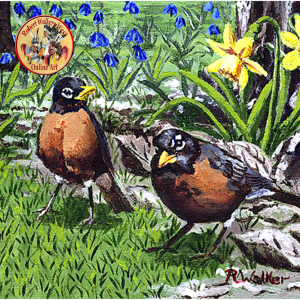
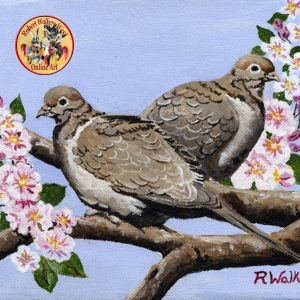
Downies
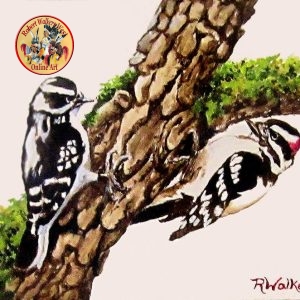
Occasionally I’ll have a void on my easel and nothing in my head, (The empty head happens a lot lately) so if I have some empty canvas/board around the studio, I’ll start painting.
This one turned out to be “Downies”. It’s an original acrylic painting on an 8 X 10 canvas board, and is designed to fit any standard 8 X 10 frame. If you have a “Gallery Wall” in your home, this would be a great addition to it.

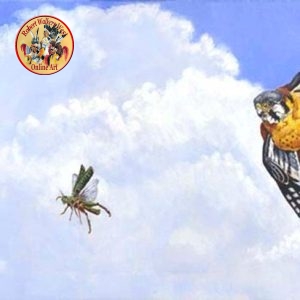
“Lunch” (Kestrel and Grasshopper)

$750.00

“Lunch”
North America’s smallest falcon, the American Kestrel packs a predator’s fierce intensity into its small body. It’s one of the most colorful of all raptors: the male’s slate-blue head and wings contrast elegantly with his rusty-red back and tail; the female has the same warm reddish on her wings, back, and tail. Hunting for insects and other small prey in open territory, kestrels perch on wires or poles, or hover facing into the wind, flapping and adjusting their long tails to stay in place.
This is an original acrylic painting on a gallery-wrapped canvas. It’s overall size is 36 X 18 inches. There is nothing covering the canvas.

“Big Horn” Original acrylic on an 8X10 canvas board

$125.00

Big Horn Sheep SKU-AN05
The bighorn sheep is a species of sheep native to North America. It is named for its large horns. A pair of horns might weigh up to 30 pounds, and the sheep typically weigh up to 315 lbs. The sheep originally crossed into North America over the Bering Land Bridge from Siberia. The population in North America peaks in the millions, and the bighorn sheep entered into the mythology of Native Americans.
The Sheep Eaters (named after their staple diet), or “Tukudeka”, lived high in mountain fastnesses favored also by the bighorn sheep they ate. They were a branch of the Shoshone. Both Indians and sheep found a precarious niche in rugged mountain country at higher altitudes.
Description:
It’s an original acrylic painting on an 8 X 10 canvas board and is designed to fit any standard 8 X 10 frame. If you have a “Gallery Wall” in your home, this would be a great addition to it.

“Pucksinewah” (Shawnee War Chief) 15298823

$1,500.00

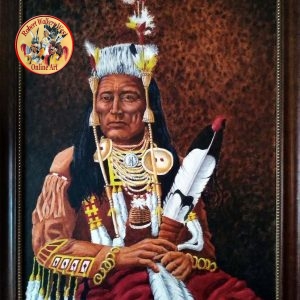
Puckshinwa “Shawnee War Chief”
Puckshinwa, meaning “alights from flying”, was a Shawnee War Chief of the Kispoko during Pontiac’s Rebellion.
Pucksinewah was father to Tecumseh, a Shawnee chief and warrior who promoted resistance to the expansion of the United States onto Native American lands. A persuasive orator, Tecumseh traveled widely, forming a Native American Confederacy and promoting intertribal unity. Even though his efforts to unite Native Americans ended with his death in the War of 1812, he became an iconic folk hero in American, Indigenous, and Canadian popular history.
Puckshinwa “Shawnee War Chief”
Puckshinwa, meaning “alights from flying”, was a Shawnee War Chief of the Kispoko during Pontiac’s Rebellion.
Pucksinewah was father to Tecumseh, a Shawnee chief and warrior who promoted resistance to the expansion of the United States onto Native American lands. A persuasive orator, Tecumseh traveled widely, forming a Native American Confederacy and promoting intertribal unity. Even though his efforts to unite Native Americans ended with his death in the War of 1812, he became an iconic folk hero in American, Indigenous, and Canadian popular history.

“The Last Hunt”

$1,250.00

The Last Hunt
Upon arriving in the Ohio Country, the Delaware Tribes formed alliances with Frenchmen engaged in the fur trade. The French provided the natives with European cookware and guns, as well as alcohol, in return for furs. The French and British colonists struggled for control of the Ohio Country beginning in the 1740s, and as the British gained control of the Ohio Country, the Delawares chose to ally themselves with the stronger party. This was the case until the French abandoned all of their North American colonies to Britain. The Delawares thereafter remained loyal to the British and the American colonists until the American Revolution.
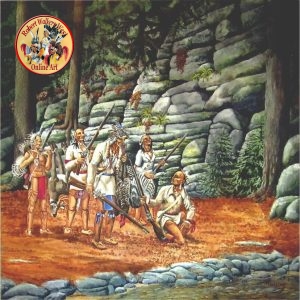
“The Last Hunt” depicts a hunting party of Delaware Indians in their final days before they were displaced to the Oklahoma Territory. The old chief and his party are having a good hunt in what is now the Mohican State Park in Ohio. It will be their “Last Hunt before their way of life changes forever.
This acrylic painting is on a 36 X 36 X 1 gallery-wrapped canvas, and may be hung without framing.

“Catch of the Day”

$650.00

“Catch of the Day”
The American Bald Eagle (Haliaeetus leucocephalus) is a majestic bird of prey and the national symbol of the United States. Known for its striking white head and tail feathers, the bald eagle is a powerful and skilled hunter, particularly adept at fishing.
Bald eagles have eyesight that is four to eight times sharper than that of humans. This incredible vision allows them to spot fish swimming beneath the water’s surface from great heights.
Bald eagles often hunt by soaring high above water bodies, scanning for fish. Once they spot a target, they dive at high speeds, extending their talons forward to grab the fish just below the water’s surface.
This sculpture is of a Bald Eagle at the moment it snatches a fish from the water.
The piece is the original and sculpted in two-part epoxy, is approximately 16 inches high with a radius of 14 inches, and has a built in turntable so it can be rotated without sliding it on your furnature.