Original Artwork

$1,250.00

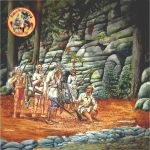
“The Last Hunt”

The Last Hunt
Upon arriving in the Ohio Country, the Delaware Tribes formed alliances with Frenchmen engaged in the fur trade. The French provided the natives with European cookware and guns, as well as alcohol, in return for furs. The French and British colonists struggled for control of the Ohio Country beginning in the 1740s, and as the British gained control of the Ohio Country, the Delawares chose to ally themselves with the stronger party. This was the case until the French abandoned all of their North American colonies to Britain. The Delawares thereafter remained loyal to the British and the American colonists until the American Revolution.
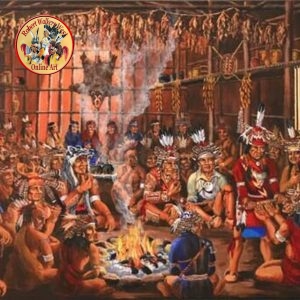
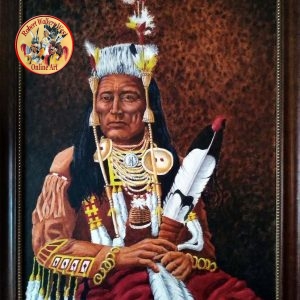
“The Last Hunt” depicts a hunting party of Delaware Indians in their final days before they were displaced to the Oklahoma Territory. The old chief and his party are having a good hunt in what is now the Mohican State Park in Ohio. It will be their “Last Hunt before their way of life changes forever.
This acrylic painting is on a 36 X 36 X 1 gallery-wrapped canvas, and may be hung without framing.
International Shipping: If you are outside the U.S., please contact us directly for a shipping quote.

1 in stock

Category:
Description

Description

The Last Hunt
Upon arriving in the Ohio Country, the Delaware Tribes formed alliances with Frenchmen engaged in the fur trade. The French provided the natives with European cookware and guns, as well as alcohol, in return for furs. The French and British colonists struggled for control of the Ohio Country beginning in the 1740s, and as the British gained control of the Ohio Country, the Delawares chose to ally themselves with the stronger party. This was the case until the French abandoned all of their North American colonies to Britain. The Delawares thereafter remained loyal to the British and the American colonists until the American Revolution.
“The Last Hunt” depicts a hunting party of Delaware Indians in their final days before they were displaced to the Oklahoma Territory. The old chief and his party are having a good hunt in what is now the Mohican State Park in Ohio. It will be their “Last Hunt before their way of life changes forever.
This acrylic painting is on a 36 X 36 X 1 gallery-wrapped canvas, and may be hung without framing.
Reviews (0)

Reviews

There are no reviews yet.

Be the first to review ““The Last Hunt””

Your email address will not be published. Required fields are marked *

More Products

“Quoth the Raven”

$125.00

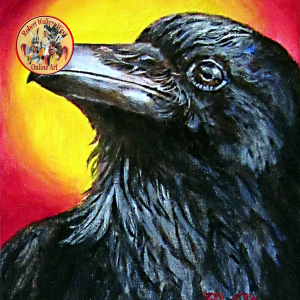
“Quoth the Raven”
This is an acrylic original on an 8X10 canvas board. Over the years, I have painted a variety of 8X10 original bird pairs. You will find other of these originals scattered throughout this Gallery. Eventually I plan to release prints of these in “Collections” under the name “Birds of the Air”. The Collections that will be available sometime in the future. This is one of the originals. All of these originals will fit a standard 8X10 frame of your choosing.

“Big Horn” Original acrylic on an 8X10 canvas board

$125.00

Big Horn Sheep SKU-AN05
The bighorn sheep is a species of sheep native to North America. It is named for its large horns. A pair of horns might weigh up to 30 pounds, and the sheep typically weigh up to 315 lbs. The sheep originally crossed into North America over the Bering Land Bridge from Siberia. The population in North America peaks in the millions, and the bighorn sheep entered into the mythology of Native Americans.
The Sheep Eaters (named after their staple diet), or “Tukudeka”, lived high in mountain fastnesses favored also by the bighorn sheep they ate. They were a branch of the Shoshone. Both Indians and sheep found a precarious niche in rugged mountain country at higher altitudes.
Description:
It’s an original acrylic painting on an 8 X 10 canvas board and is designed to fit any standard 8 X 10 frame. If you have a “Gallery Wall” in your home, this would be a great addition to it.

“Sits With Thoughts” (Framed)

$1,200.00

“Sits with Thoughts” Framed Acrylic Painting
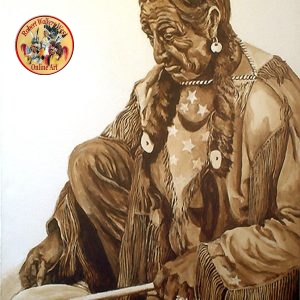
Plenty Coups was the principal chief of the Crow Nation and a visionary leader.
He allied the Crow with the whites when the war for the West was being fought because he had experienced a vision when he was very young that non-Native American people would ultimately take control of his homeland (Montana). He wanted the Crow to survive as a people and their customs and spiritual beliefs to carry on. His efforts on their behalf ensured that this happened, and he led his people peacefully into the 20th century.
The Acrylic Painting is framed in a 38X28 inch frame and is ready to hang on your wall.

“The Healing”

$750.00

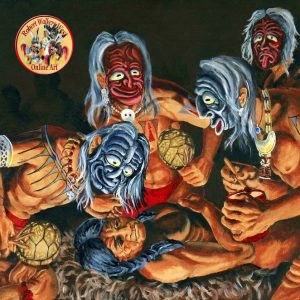
The Healing
The False Face Society is probably the best known of the medicinal societies among the Iroquois, especially for its dramatic wooden masks. The masks are used in healing rituals which invoke the spirit of an old hunch-backed man. Those cured by the society become members. Also, echoing the significance of dreams to the Iroquois, anyone who dreams that they should be a member of the society may join.
The size of the original is 16X20 and is painted on a stretched canvas.

“Mourning Doves”

$125.00

Mourning Doves
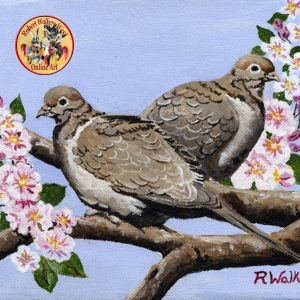
This is “Mourning Doves”. It’s an original acrylic painting on an 8 X 10 gallery-wrapped canvas and can be hung without a frame. It isdesigned to fit any standard 8 X 10 frame. If you have a “Gallery Wall” in your home, this would be a great addition to it.

“Ghost Drums”

$750.00

Ghost Drums
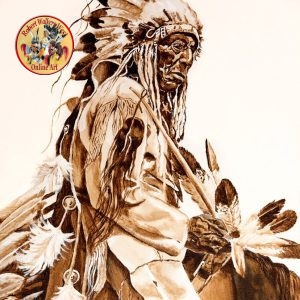
The basis for the Ghost Dance is the circle dance, a traditional dance done by many Native Americans. The Ghost Dance was first practiced by the Nevada Northern Paiute in 1889. The practice swept throughout much of the Western United States, quickly reaching areas of California and Oklahoma. As the Ghost Dance spread from its original source, different tribes synthesized selective aspects of the ritual with their own beliefs.
The Ghost Dance was associate(Wovoka’s) prophecy of an end to white expansion while preaching goals of clean living, an honest life, and cross-cultural cooperation by Indians. Practice of the Ghost Dance movement was believed to have contributed to Lakota resistance to assimilation under the Dawes Act.