
Description
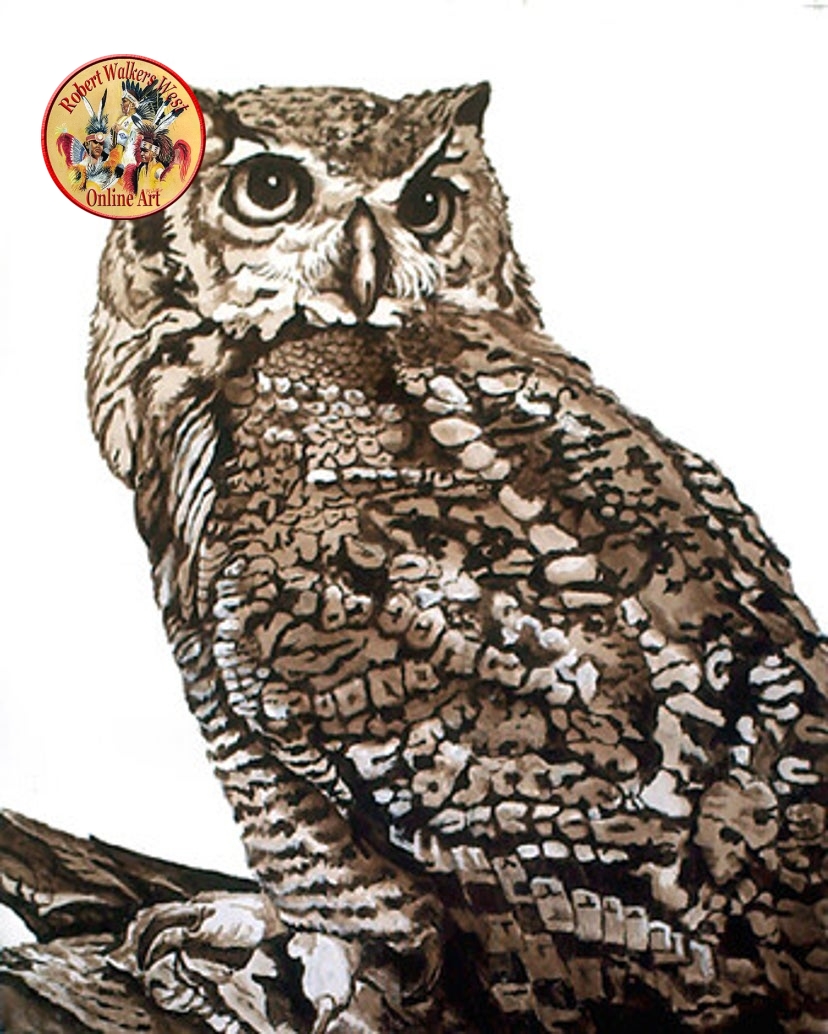
“Hootie”
“Hootie” is an original mono-color acrylic on a 16X20 inch gallery-wrapped canvas. It has been wired and is ready to be hung on your wall.
This painting draws the most attention when hung in a show.

$450.00
“Hootie”
“Hootie” is an original mono-color acrylic on a 16X20 inch gallery-wrapped canvas. It has been wired and is ready to be hung on your wall.
This painting draws the most attention when hung in a show.
International Shipping: If you are outside the U.S., please contact us directly for a shipping quote.
1 in stock
“Hootie”
“Hootie” is an original mono-color acrylic on a 16X20 inch gallery-wrapped canvas. It has been wired and is ready to be hung on your wall.
This painting draws the most attention when hung in a show.
“One Damn Thing After Another”
In Yellowstone National Park, Wolves are more successful killing elk than bison. However, in late winter when bison were vulnerable because of poor condition or of bison that were injured or young, wolves learned to kill bison.
In this sculpture, considering the wolf being trampled, and the one being gored, it would appear that the outcome is far from certain.
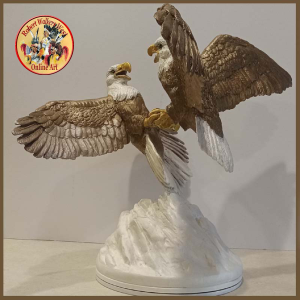
Scientists don’t know what characteristics bald eagles look for in potential mates or how the birds assess each other’s reproductive potential.
It’s known, however, that bald eagle pairs engage in a number of courtship rituals as they build their bond.
The most famous and recognizable of these rituals is the “cartwheel courtship flight,” in which two bald eagles will fly up high, lock talons and then get into a cartwheel spin as they fall toward the ground, breaking apart at the last minute.
This piece is sculpted in two-part epoxy, is approximately 18 inches tall, and its radius is 19 inches. It has a turntable built into it so that it can be rotated easily.
Puckshinwa “Shawnee War Chief”
Puckshinwa, meaning “alights from flying”, was a Shawnee War Chief of the Kispoko during Pontiac’s Rebellion.
Pucksinewah was father to Tecumseh, a Shawnee chief and warrior who promoted resistance to the expansion of the United States onto Native American lands. A persuasive orator, Tecumseh traveled widely, forming a Native American Confederacy and promoting intertribal unity. Even though his efforts to unite Native Americans ended with his death in the War of 1812, he became an iconic folk hero in American, Indigenous, and Canadian popular history.
Puckshinwa “Shawnee War Chief”
Puckshinwa, meaning “alights from flying”, was a Shawnee War Chief of the Kispoko during Pontiac’s Rebellion.
Pucksinewah was father to Tecumseh, a Shawnee chief and warrior who promoted resistance to the expansion of the United States onto Native American lands. A persuasive orator, Tecumseh traveled widely, forming a Native American Confederacy and promoting intertribal unity. Even though his efforts to unite Native Americans ended with his death in the War of 1812, he became an iconic folk hero in American, Indigenous, and Canadian popular history.
Majestic Encounter: Cheyenne Warrior and Bison
Immerse yourself in the rich heritage and relentless spirit of the Great Plains with this stunning wall hanging sculpture. Capturing a pivotal moment in the life of the Cheyenne people, this piece features a valiant Cheyenne warrior astride a powerful horse, poised to bring down a mighty bison. The intricate details and dynamic composition vividly portray the warrior’s unwavering determination and skill as he hunts to secure vital provisions for the tribe’s winter sustenance. This artwork is not just a depiction of a hunt; it’s a tribute to the resilience, bravery, and timeless traditions of the Cheyenne Nation. A compelling addition to any collection, this sculpture invites you to witness the raw energy and profound connection between man, animal, and the land they both call home.
This is an original sculpture of a Cheyenne Warrior on horseback, about to bring down a running bison. The piece is done in two-part epoxy and is designed as a wall hanging.
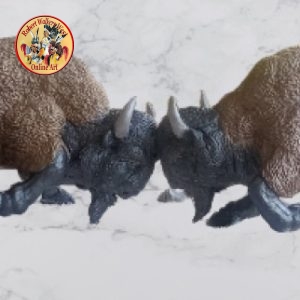
Bison breed in the summer. Male bison compete for mating rights, butting heads with other bulls. In these competitions, male bison may also lower their heads, paw at the ground, and emit a bellow which can be heard up to three miles away. This sculpture is called “Buttin’ Heads”, and was completed in late September of 2024.
The overall size is 23 inches long, 12 inches wide, and 12 inches high. It was designed to set on a shelf in your living room or studio, or better yet, on the mantle of your fireplace. It was sculpted using a two-part epoxy, and is coated with three colors of metallic wax. The sculpture is an original work by Robert M Walker, and is one of a kind. Your Friends will be amazed!!!
Geronimo was a Bedonkohe Apache leader of the Chiricahua Apache, who led his people’s defense of their homeland against the military might of the United States.
“Geronimo”
Geronimo was an Apache leader who continued the tradition of the Apaches resisting white colonization of their homeland in the Southwest, participating in raids into Sonora and Chihuahua in Mexico. After years of war, Geronimo finally surrendered to U.S. troops in 1886. While he became a celebrity, he spent the last two decades of his life as a prisoner of war.
This 16 X 20 mono-color painting is of Geronimo in his last years, maybe thinking of his days in Arizona, fighting for his tribal lands.
The Eagles of Kachemak Bay in Alaska congregate in this area due to the fact that the lakes of their ‘home territories’ are frozen over. They assemble at this location to feast on the waterfowl that congregate here as well as for the fish in the bay.
This acrylic painting of Bald Eagles in flight over Kachemak Bay, Alaska, is an original acrylic painting on a 36 X 24 inch canvas, and is gallery-wrapped.
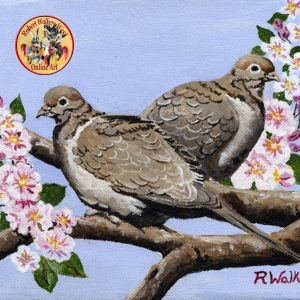
Mourning Doves
This is “Mourning Doves”. It’s an original acrylic painting on an 8 X 10 gallery-wrapped canvas and can be hung without a frame. It isdesigned to fit any standard 8 X 10 frame. If you have a “Gallery Wall” in your home, this would be a great addition to it.
“Lunch”
North America’s smallest falcon, the American Kestrel packs a predator’s fierce intensity into its small body. It’s one of the most colorful of all raptors: the male’s slate-blue head and wings contrast elegantly with his rusty-red back and tail; the female has the same warm reddish on her wings, back, and tail. Hunting for insects and other small prey in open territory, kestrels perch on wires or poles, or hover facing into the wind, flapping and adjusting their long tails to stay in place.
This is an original acrylic painting on a gallery-wrapped canvas. It’s overall size is 36 X 18 inches. There is nothing covering the canvas.
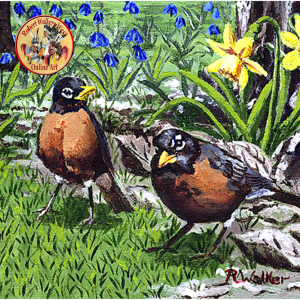
Robins
This is “Robin Pair”. It’s an original acrylic painting on an 8 X 10 canvas board, and is designed to fit any standard 8 X 10 frame. If you have a “Gallery Wall” in your home, this would be a great addition to it.
Hunters Moon
The full moon that appears in October is called the Hunters Moon. The first moon after the Harvest Moon is the Hunters Moon, so named as the preferred month to hunt summer-fattened deer and fox unable to hide in now bare fields. Like the Harvest Moon, the Hunters Moon is also particularly bright and long in the sky, giving hunters the opportunity to stalk prey at night. Probably because of the threat of winter looming close, the “Hunters Moon” is generally accorded with special honor, historically serving as an important feast day in both Western Europe and among many Native American tribes.
“Hunter’s Moon” is an original acrylic painting on a 16 X 20 inch panel.
“Owl Eyes” is an 8 X 10 inch acrylic mono-color painting on a canvas board. This again is one of many paintings that I do to fill in between major projects. If you have a “Gallery Wall” in your home, this would be a great addition to it.
Select at least 2 products
to compare






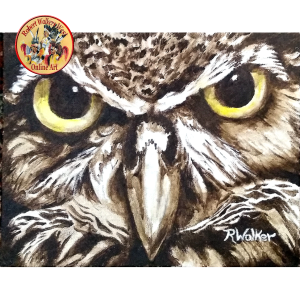
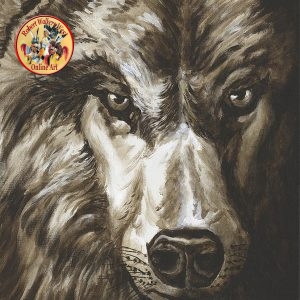 "Grandma What Big Eyes You Have!!!"
  "Counting Coupe"
  "Ghost Drums"
  "Bison Bull with an Attitude"
 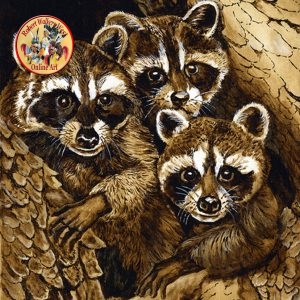 "The Baby Bunch" Original Acrylic Painting on 16X20 Gallery-Wrapped Canvas
 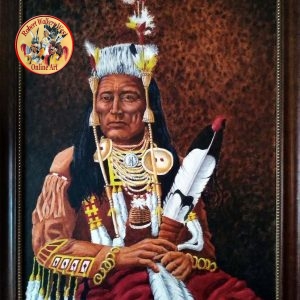 "Sits With Thoughts" (Framed)
  "Tuscarora Adoption"
 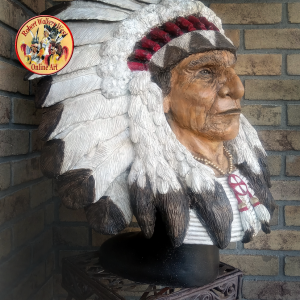 "Red Cloud" (Lakota Chief)
  "Hootie"
 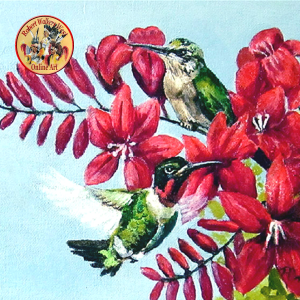 "Hummingbird Pair"
  "Ten Horse Team on the Overland Trail"
 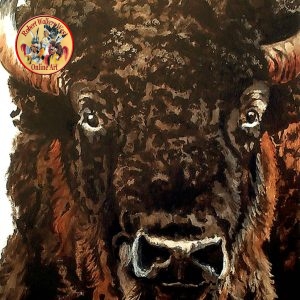 "Bull Bison"
Reviews
There are no reviews yet.