
Description
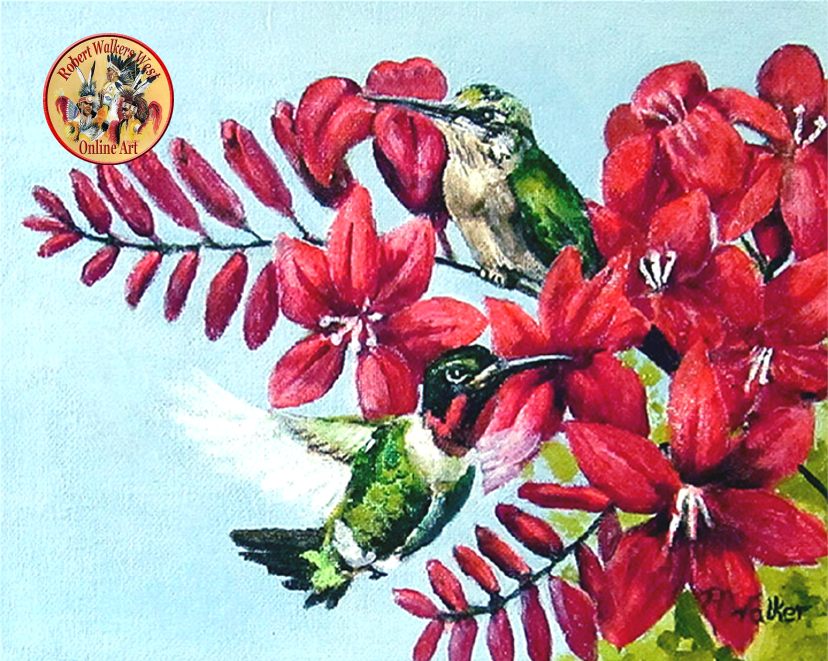
Ruby Throats
This is “Ruby Throats”. It’s an original acrylic painting on an 8 X 10 canvas panel, and is designed to fit any standard 8 X 10 frame. If you have a “Gallery Wall” in your home, this would be a great addition to it

$125.00
Ruby Throats
This is “Ruby Throats”. It’s an original acrylic painting on an 8 X 10 canvas panel, and is designed to fit any standard 8 X 10 frame. If you have a “Gallery Wall” in your home, this would be a great addition to it
International Shipping: If you are outside the U.S., please contact us directly for a shipping quote.
Ruby Throats
This is “Ruby Throats”. It’s an original acrylic painting on an 8 X 10 canvas panel, and is designed to fit any standard 8 X 10 frame. If you have a “Gallery Wall” in your home, this would be a great addition to it
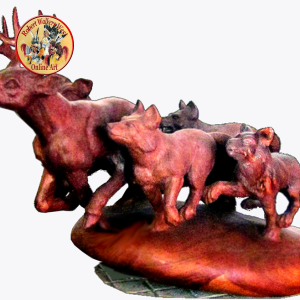
“The Chase”
This woodcarving was carved from a single wild cherry tree. The trunk was sawed into 5 inch planks, kiln dried, surfaced, then reassembled into a 14 X 16 X 24 inch carving block
The actual carving began in July of 1995, and was completed in early November of that year.
I entered the carving in the Dayton Woodcarving Show, it was accepted, and won a blue ribbon in the competition.
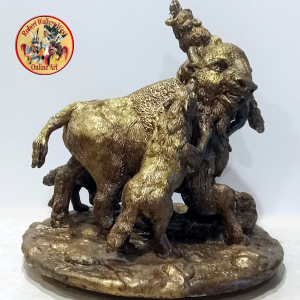
“One Damn Thing After Another”
In Yellowstone National Park, Wolves are more successful killing elk than bison. However, in late winter when bison were vulnerable because of poor condition or of bison that were injured or young, wolves learned to kill bison.
In this sculpture, considering the wolf being trampled, and the one being gored, it would appear that the outcome is far from certain.
After the Civil War, buffalo killing went into high gear.
The combination of guns, railroads, commercial activity, and war between European settlers and American Indians proved deadly to the species. There was a huge market for buffalo skins and hides in the Northeast United States and Europe. A good buffalo skin would sell for $3 in Kansas, and a finished buffalo-hide winter coat would sell for $50. Buffalo leather was also well suited and in high demand for the belts used in pulleys and for steam engines in factories of the time.
Given the scope of this carnage, some hunters, including Buffalo Bill Cody, spoke out in favor of protecting the bison, but President Ulysses S. Grant refused to sign legislation to that effect. The U.S. Army encouraged the excessive killing of buffalo as a way of eliminating food supplies for Indian communities, enabling them to starve Indians off their land and onto reservations.
In the spring of 1886, a taxidermist from the Smithsonian, Hornaday, and his team, headed to Montana to collect specimens for the museum. Hornaday was stunned to find no live buffalo on the plains, only thousands of skeletons bleaching in the sun. The impact of killing some of the last buffalo was not lost on Hornaday, and he began to think about how to save the species.
The conservation of the bison had begun.
This is a polymer clay sculpture. It has been painted to a Faux Bronze finish. It is on a 12 inch circular wooden base. The overall dimensions are 18 X 12 X 12 inches.
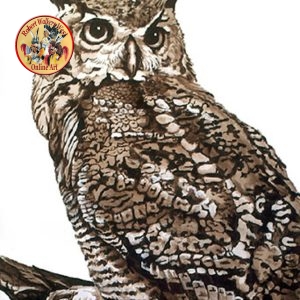
“Hootie”
“Hootie” is an original mono-color acrylic on a 16X20 inch gallery-wrapped canvas. It has been wired and is ready to be hung on your wall.
This painting draws the most attention when hung in a show.
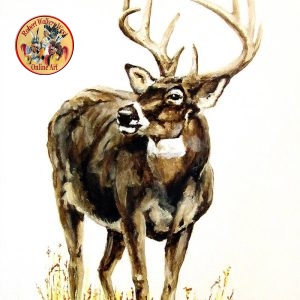
Ten Point SKU-AN01
This ten pointer would make a great wall hanging that most hunters wait for all of their lives. This would be a great gift for the “Hunter” that has everything.
Description:
This is an acrylic painting on a 16X20 gallery wrapped canvas. The great part is that the painting is an original, and this means it is a “One-of-a-Kind”. No one else can get one.
$450
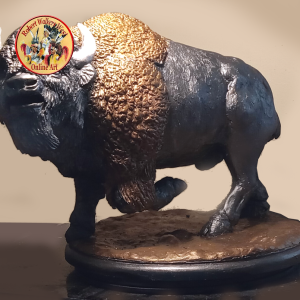
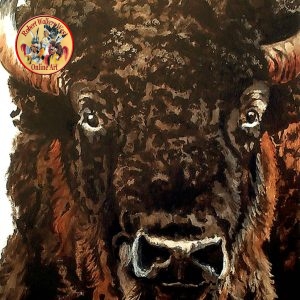
Bison Bull SKU-AN04Truth be told; I had a blank canvas and no clear direction when I painted this. Having said that- – – – Here it is!!!
Description:This is an acrylic painting on a 16X20 gallery wrapped canvas. The great part is that the painting is an original, and this means it is a “One-of-a-Kind”. No one else can get one.$450
“Lunch”
North America’s smallest falcon, the American Kestrel packs a predator’s fierce intensity into its small body. It’s one of the most colorful of all raptors: the male’s slate-blue head and wings contrast elegantly with his rusty-red back and tail; the female has the same warm reddish on her wings, back, and tail. Hunting for insects and other small prey in open territory, kestrels perch on wires or poles, or hover facing into the wind, flapping and adjusting their long tails to stay in place.
This is an original acrylic painting on a gallery-wrapped canvas. It’s overall size is 36 X 18 inches. There is nothing covering the canvas.
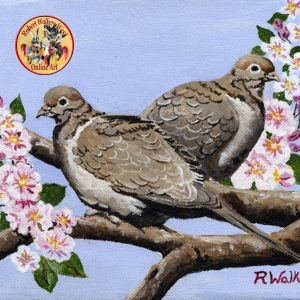
Mourning Doves
This is “Mourning Doves”. It’s an original acrylic painting on an 8 X 10 gallery-wrapped canvas and can be hung without a frame. It isdesigned to fit any standard 8 X 10 frame. If you have a “Gallery Wall” in your home, this would be a great addition to it.
Robins
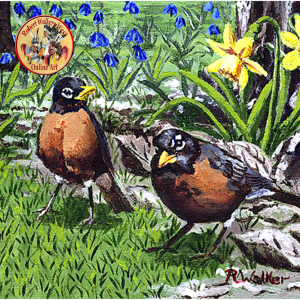
This is “Robin Pair”. It’s an original acrylic painting on an 8 X 10 canvas board, and is designed to fit any standard 8 X 10 frame. If you have a “Gallery Wall” in your home, this would be a great addition to it.
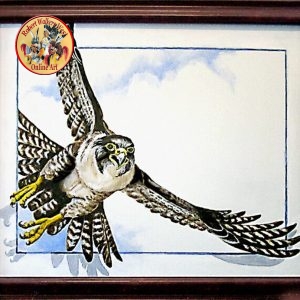
I created this original acrylic painting several years ago, just to see if I could. It is a Peregrine Falcon that uses the Trompe’ style that creates the illusion that it is flying out of its’ frame. I’m not sure how successful I was, but here it is.
This is an acrylic painting on a gallery-wrapped 16X20 canvas. It has been framed, but perhaps it might be better if the frame was removed and hung as it is.
“Hootie”
“Hootie” is an original mono-color acrylic on a 16X20 inch gallery-wrapped canvas. It has been wired and is ready to be hung on your wall.
This painting draws the most attention when hung in a show.
Final Approach
This is a pair of Sandhill Cranes coming in on the “Final Approach” for a landing. This original pencil drawing is 15X15 inches and is drawn on archival paper. The size of the framed piece is 22X24 inches The pencil drawing has been double matted in grays, and backed with Foam-core. It is framed in black metal, and covered in non-glare glass.
Select at least 2 products
to compare


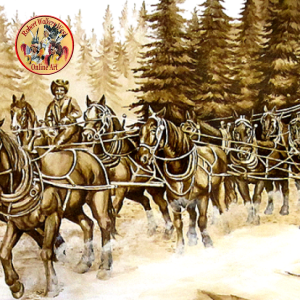 "Ten Horse Team on the Overland Trail"
 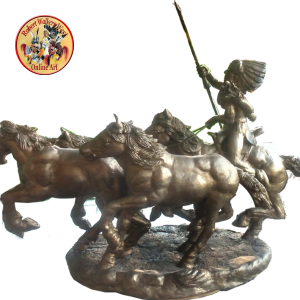 "Counting Coupe"
 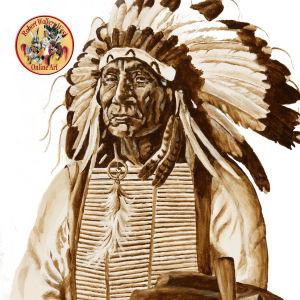 "Red Cloud" (Lakota Chief)
Reviews
There are no reviews yet.