Original Artwork

$1,500.00

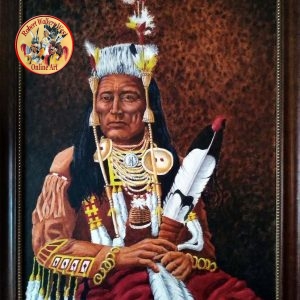
“Tuscarora Adoption”

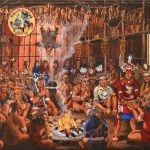
The Tuscarora Adoption Ceremony
In late 17th and early 18th-century North Carolina, colonists reported two primary branches of the Tuscarora. Varying accounts circa 1708-1710 estimated the number of Tuscarora warriors as from 1200-2000.
The Tuscarora had to deal with more numerous colonists’ encroaching on his community. They raided his villages, kidnapped the people to be sold into slavery, suffered substantial population losses after exposure to the infectious diseases of the Europeans. By 1711, the Tuscarora Chief Hancock believed he had to attack the settlers to fight back. The Indian tribes attacked, killing hundreds of settlers, including several key political figures among the colonists.
The North Carolina militia, and allied Native Americans, attacked the Tuscarora in 1712 and 1713.the Tuscaroras were defeated in the battle of 1713, and 1500 Tuscarora fled to New York to join the Iroquois Confederacy. The Haudenosaunee (Iroquois) Five Nations of New York were more than happy to accommodate their distant cousins as the “Sixth Nation”, and in 1722 adopted them into their Confederacy.
This is the premise around which the “Tuscarora Adoption Ceremony” was created.
The size of the original is 36 X 40 and is painted on stretched canvas.
$1500

International Shipping: If you are outside the U.S., please contact us directly for a shipping quote.

1 in stock

Category:
Description

Description

The Tuscarora Adoption Ceremony
In late 17th and early 18th-century North Carolina, colonists reported two primary branches of the Tuscarora. Varying accounts circa 1708-1710 estimated the number of Tuscarora warriors as from 1200-2000.
The Tuscarora had to deal with more numerous colonists’ encroaching on his community. They raided his villages, kidnapped the people to be sold into slavery, suffered substantial population losses after exposure to the infectious diseases of the Europeans. By 1711, the Tuscarora Chief Hancock believed he had to attack the settlers to fight back. The Indian tribes attacked, killing hundreds of settlers, including several key political figures among the colonists.
The North Carolina militia, and allied Native Americans, attacked the Tuscarora in 1712 and 1713.the Tuscaroras were defeated in the battle of 1713, and 1500 Tuscarora fled to New York to join the Iroquois Confederacy. The Haudenosaunee (Iroquois) Five Nations of New York were more than happy to accommodate their distant cousins as the “Sixth Nation”, and in 1722 adopted them into their Confederacy.
This is the premise around which the “Tuscarora Adoption Ceremony” was created.
The size of the original is 36 X 40 and is painted on stretched canvas.
$1500
Reviews (0)

Reviews

There are no reviews yet.

Be the first to review ““Tuscarora Adoption””

Your email address will not be published. Required fields are marked *

More Products

“Catch of the Day”

$650.00

“Catch of the Day”
The American Bald Eagle (Haliaeetus leucocephalus) is a majestic bird of prey and the national symbol of the United States. Known for its striking white head and tail feathers, the bald eagle is a powerful and skilled hunter, particularly adept at fishing.
Bald eagles have eyesight that is four to eight times sharper than that of humans. This incredible vision allows them to spot fish swimming beneath the water’s surface from great heights.
Bald eagles often hunt by soaring high above water bodies, scanning for fish. Once they spot a target, they dive at high speeds, extending their talons forward to grab the fish just below the water’s surface.
This sculpture is of a Bald Eagle at the moment it snatches a fish from the water.
The piece is the original and sculpted in two-part epoxy, is approximately 16 inches high with a radius of 14 inches, and has a built in turntable so it can be rotated without sliding it on your furnature.

“One Damn Thing After Another”

$450.00

“One Damn Thing After Another”
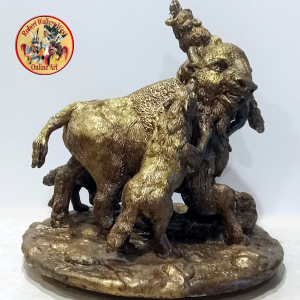
In Yellowstone National Park, Wolves are more successful killing elk than bison. However, in late winter when bison were vulnerable because of poor condition or of bison that were injured or young, wolves learned to kill bison.
In this sculpture, considering the wolf being trampled, and the one being gored, it would appear that the outcome is far from certain.

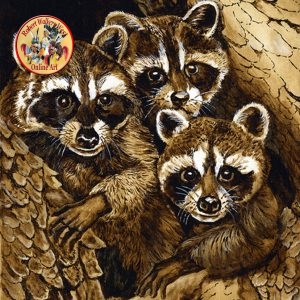
“The Baby Bunch” Original Acrylic Painting on 16X20 Gallery-Wrapped Canvas

$450.00

Baby Bunch SKU-AN02
Many years ago, when I was young, (That was just shortly before they invented Dirt.) I lived in the back country, and spent a good deal of my time in the woods with a camera. On one of my forays, I ran across a litter of raccoons waiting for mama to return home to feed them. Apparently she had been delayed for quite some time, and the young coons were not happy about it. As a matter of fact that is how I found them in the first place because they were raising quite a commotion, and I heard them before I saw them.Description:This is an acrylic painting on a 16X20 gallery wrapped canvas. The great part is that the painting is an original, and this means it is a “One-of-a-Kind”. No one else can get one.
$450

“Ten Horse Team on the Overland Trail”

$950.00

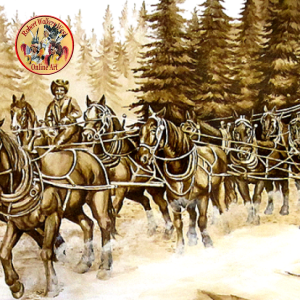
Ten Horse Team on the Overland Trail
The Overland Trail (also known as the “Overland Stage Line”) was a stagecoach and wagon trail in the American West during the 19th century. While portions of the route had been used by explorers and trappers since the 1820s, the Overland Trail was most heavily used in the 1860s as an alternative route to the Oregon, California, and Utan trails through central Wyoming. The Overland Trail was famously used by the Overland Stage Company owned by Ben Holladay to run mail and passengers to Salt Lake City, Utah, via stagecoaches in the early 1860s. The stage line operated until 1869 when the completion of the First Transcontinental Railroad eliminated the need for mail service via stagecoach.
The original “Ten Horse Team” is an acrylic painting on a 2 X 4 foot canvas

“Majestic Encounter: Cheyenne Warrior and Bison”

$1,500.00

Majestic Encounter: Cheyenne Warrior and Bison
Immerse yourself in the rich heritage and relentless spirit of the Great Plains with this stunning wall hanging sculpture. Capturing a pivotal moment in the life of the Cheyenne people, this piece features a valiant Cheyenne warrior astride a powerful horse, poised to bring down a mighty bison. The intricate details and dynamic composition vividly portray the warrior’s unwavering determination and skill as he hunts to secure vital provisions for the tribe’s winter sustenance. This artwork is not just a depiction of a hunt; it’s a tribute to the resilience, bravery, and timeless traditions of the Cheyenne Nation. A compelling addition to any collection, this sculpture invites you to witness the raw energy and profound connection between man, animal, and the land they both call home.
This is an original sculpture of a Cheyenne Warrior on horseback, about to bring down a running bison. The piece is done in two-part epoxy and is designed as a wall hanging.

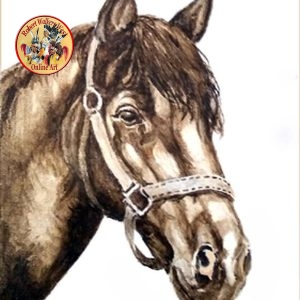
“The Horse” Original Acrylic on an 8X10 board

$125.00

“Horse” SKU-AN06
Occasionally I’ll have a void on my easel and nothing in my head, (The empty head happens a lot lately) so if I have some empty canvas/board around the studio, I’ll start painting.
This one turned out to be “Horse”. Not any particular horse. Just “Horse”.
Description:
It’s an original acrylic painting on an 8 X 10 canvas board and is designed to fit any standard 8 X 10 frame. If you have a “Gallery Wall” in your home, this would be a great addition to it.