Original Artwork

$125.00

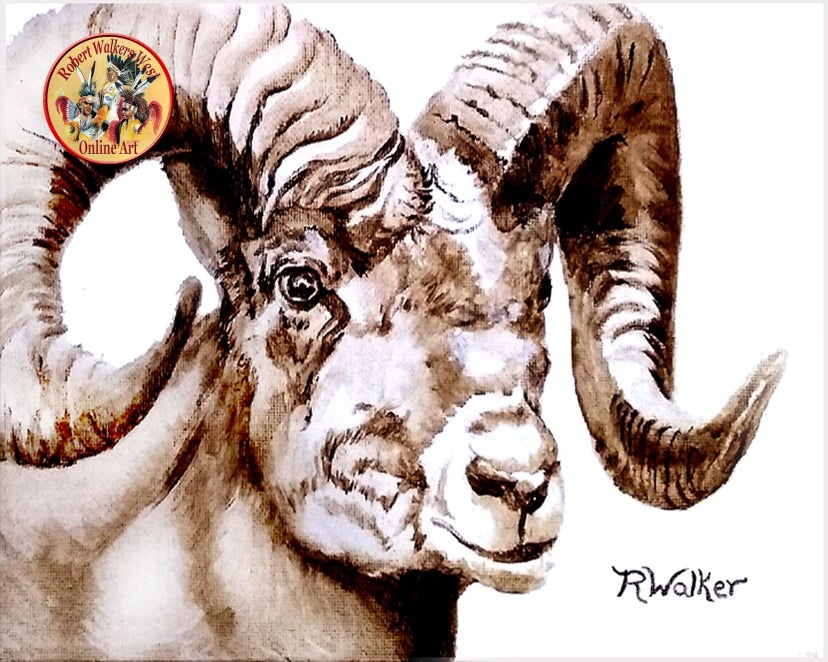
“Big Horn” Original acrylic on an 8X10 canvas board

Big Horn Sheep SKU-AN05
The bighorn sheep is a species of sheep native to North America. It is named for its large horns. A pair of horns might weigh up to 30 pounds, and the sheep typically weigh up to 315 lbs. The sheep originally crossed into North America over the Bering Land Bridge from Siberia. The population in North America peaks in the millions, and the bighorn sheep entered into the mythology of Native Americans.
The Sheep Eaters (named after their staple diet), or “Tukudeka”, lived high in mountain fastnesses favored also by the bighorn sheep they ate. They were a branch of the Shoshone. Both Indians and sheep found a precarious niche in rugged mountain country at higher altitudes.
Description:
It’s an original acrylic painting on an 8 X 10 canvas board and is designed to fit any standard 8 X 10 frame. If you have a “Gallery Wall” in your home, this would be a great addition to it.
International Shipping: If you are outside the U.S., please contact us directly for a shipping quote.

1 in stock

SKU: SKU-AN05 Category:
Description

Description

Big Horn Sheep SKU-AN05
The bighorn sheep is a species of sheep native to North America. It is named for its large horns. A pair of horns might weigh up to 30 pounds, and the sheep typically weigh up to 315 lbs. The sheep originally crossed into North America over the Bering Land Bridge from Siberia. The population in North America peaks in the millions, and the bighorn sheep entered into the mythology of Native Americans.
The Sheep Eaters (named after their staple diet), or “Tukudeka”, lived high in mountain fastnesses favored also by the bighorn sheep they ate. They were a branch of the Shoshone. Both Indians and sheep found a precarious niche in rugged mountain country at higher altitudes.
Description:
It’s an original acrylic painting on an 8 X 10 canvas board and is designed to fit any standard 8 X 10 frame. If you have a “Gallery Wall” in your home, this would be a great addition to it.
Reviews (0)

Reviews

There are no reviews yet.

Be the first to review ““Big Horn” Original acrylic on an 8X10 canvas board”

Your email address will not be published. Required fields are marked *

More Products

“Peregrine”

$300.00

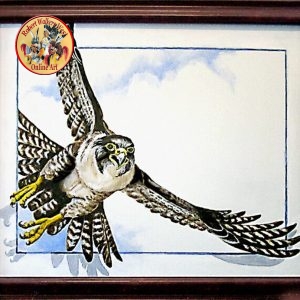
I created this original acrylic painting several years ago, just to see if I could. It is a Peregrine Falcon that uses the Trompe’ style that creates the illusion that it is flying out of its’ frame. I’m not sure how successful I was, but here it is.
This is an acrylic painting on a gallery-wrapped 16X20 canvas. It has been framed, but perhaps it might be better if the frame was removed and hung as it is.

“One Damn Thing After Another”

$450.00

“One Damn Thing After Another”
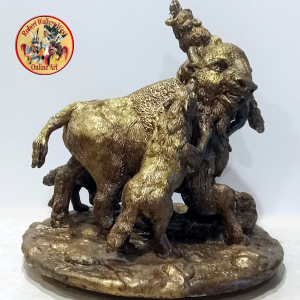
In Yellowstone National Park, Wolves are more successful killing elk than bison. However, in late winter when bison were vulnerable because of poor condition or of bison that were injured or young, wolves learned to kill bison.
In this sculpture, considering the wolf being trampled, and the one being gored, it would appear that the outcome is far from certain.

“Buttin’ Heads” The Ritual

$550.00

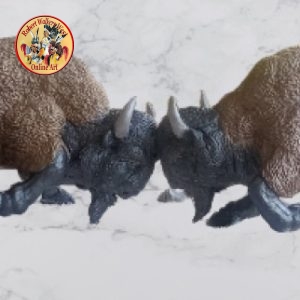
Bison breed in the summer. Male bison compete for mating rights, butting heads with other bulls. In these competitions, male bison may also lower their heads, paw at the ground, and emit a bellow which can be heard up to three miles away. This sculpture is called “Buttin’ Heads”, and was completed in late September of 2024.
The overall size is 23 inches long, 12 inches wide, and 12 inches high. It was designed to set on a shelf in your living room or studio, or better yet, on the mantle of your fireplace. It was sculpted using a two-part epoxy, and is coated with three colors of metallic wax. The sculpture is an original work by Robert M Walker, and is one of a kind. Your Friends will be amazed!!!

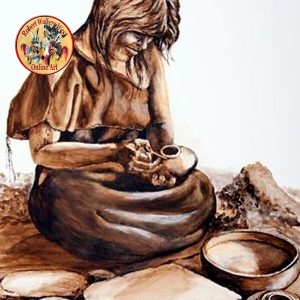
“Nampeyo” The Potter

$650.00

Nampeyo (1859 –1942) was a Hopi-Tewa potter who lived on the Hopi Reservation in Arizona. Her Tewa name was also spelled Num-pa-yu, meaning “snake that does not bite”.She used ancient techniques for making and firing pottery and used designs from “Old Hopi” pottery and sherds found at 15th-century Sikyátki ruins on First Mesa.A world record for Southwest American Indian pottery was declared at Bonhams Auction House in San Francisco on December 6, 2010, when one of Nampeyo’s art works, a decorated ceramic pot, sold for $350,000.
This monocolor is an acrylic painting on a 16X20 gallery-wrapped canvas.

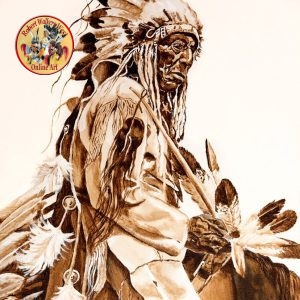
“Cheyenne Elder”

$650.00

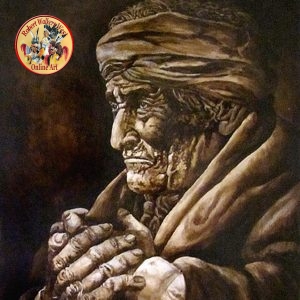
Cheyenne Elder
Between 1900 and 1930, Edward Curtis traveled deep into Indian territories and lived among dozens of Native tribes. He captured the authentic ways of life of over 80 Native cultures. One of his photographs was the reference for this acrylic mono-color. I see this old man, thinking that his way of life that he knew in his early life was gone forever, and would never return.
The size of this original is painted on a 16X20X1 stretched canvas. It is a mono-color using only raw umber acrylic paint

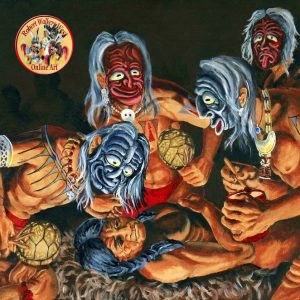
“The Healing”

$750.00

The Healing
The False Face Society is probably the best known of the medicinal societies among the Iroquois, especially for its dramatic wooden masks. The masks are used in healing rituals which invoke the spirit of an old hunch-backed man. Those cured by the society become members. Also, echoing the significance of dreams to the Iroquois, anyone who dreams that they should be a member of the society may join.
The size of the original is 16X20 and is painted on a stretched canvas.