Description
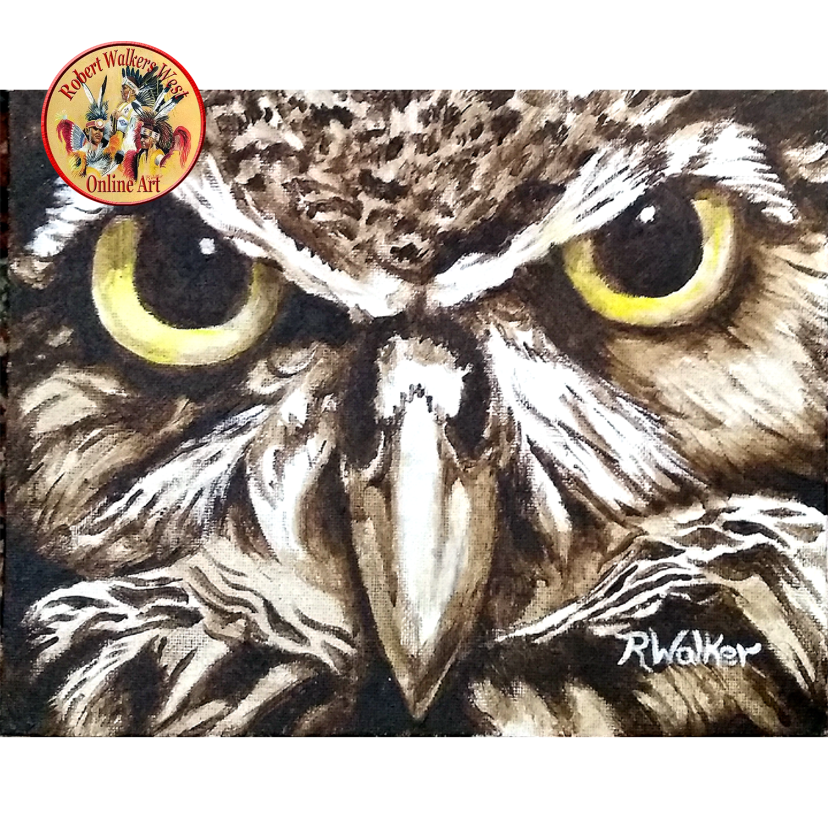
“Owl Eyes” is an 8 X 10 inch acrylic mono-color painting on a canvas board. This again is one of many paintings that I do to fill in between major projects. If you have a “Gallery Wall” in your home, this would be a great addition to it.

$125.00
“Owl Eyes” is an 8 X 10 inch acrylic mono-color painting on a canvas board. This again is one of many paintings that I do to fill in between major projects. If you have a “Gallery Wall” in your home, this would be a great addition to it.
International Shipping: If you are outside the U.S., please contact us directly for a shipping quote.
“Owl Eyes” is an 8 X 10 inch acrylic mono-color painting on a canvas board. This again is one of many paintings that I do to fill in between major projects. If you have a “Gallery Wall” in your home, this would be a great addition to it.
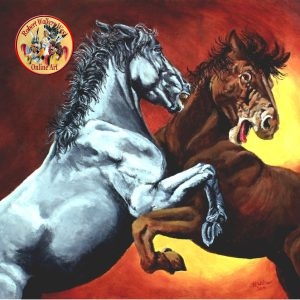
“To the Victor Go the Sorrels”
Each herd typically has a dominant stallion referred to as the “herd stallion” and a few other less dominant stallions. Interestingly, each herd is led not by the dominant stallion but by a dominant mare. This is similar to the way we humans do things.
This original acrylic painting by Robert Walker is on a 16X20 gallery-wrapped canvas.
Majestic Encounter: Cheyenne Warrior and Bison
Immerse yourself in the rich heritage and relentless spirit of the Great Plains with this stunning wall hanging sculpture. Capturing a pivotal moment in the life of the Cheyenne people, this piece features a valiant Cheyenne warrior astride a powerful horse, poised to bring down a mighty bison. The intricate details and dynamic composition vividly portray the warrior’s unwavering determination and skill as he hunts to secure vital provisions for the tribe’s winter sustenance. This artwork is not just a depiction of a hunt; it’s a tribute to the resilience, bravery, and timeless traditions of the Cheyenne Nation. A compelling addition to any collection, this sculpture invites you to witness the raw energy and profound connection between man, animal, and the land they both call home.
This is an original sculpture of a Cheyenne Warrior on horseback, about to bring down a running bison. The piece is done in two-part epoxy and is designed as a wall hanging.
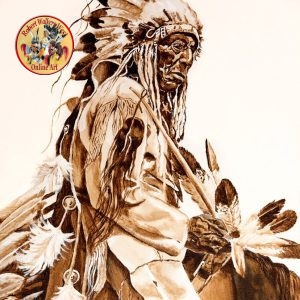
Cheyenne Elder
Between 1900 and 1930, Edward Curtis traveled deep into Indian territories and lived among dozens of Native tribes. He captured the authentic ways of life of over 80 Native cultures. One of his photographs was the reference for this acrylic mono-color. I see this old man, thinking that his way of life that he knew in his early life was gone forever, and would never return.
The size of this original is painted on a 16X20X1 stretched canvas. It is a mono-color using only raw umber acrylic paint
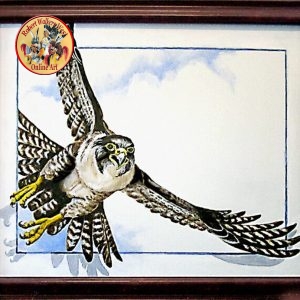
I created this original acrylic painting several years ago, just to see if I could. It is a Peregrine Falcon that uses the Trompe’ style that creates the illusion that it is flying out of its’ frame. I’m not sure how successful I was, but here it is.
This is an acrylic painting on a gallery-wrapped 16X20 canvas. It has been framed, but perhaps it might be better if the frame was removed and hung as it is.
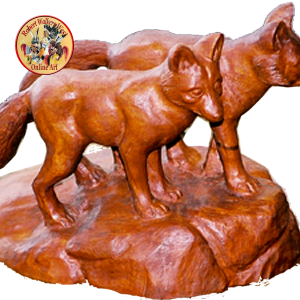
Back in the late nineties, I was into wood carving, “Big Time”!!! “Fox Cubs” is one of a very few carvings that still remain in inventory. It is carved from the wood that “The Chase” was. This might be your last chance to purchase a Robert Walker original wood carving.
Grandma SKU-AN03
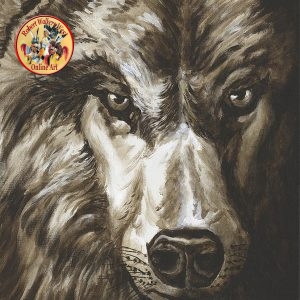
—–And Goldilocks said, “Why Grandma, what big eyes you have! The wolf said, “The better to see you with.”—-and we all know where this is going.
Description:This is an acrylic painting on a 16X20 gallery wrapped canvas. The great part is that the painting is an original, and this means it is a “One-of-a-Kind”. No one else can get one.$450
Robins
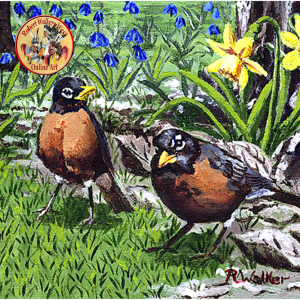
This is “Robin Pair”. It’s an original acrylic painting on an 8 X 10 canvas board, and is designed to fit any standard 8 X 10 frame. If you have a “Gallery Wall” in your home, this would be a great addition to it.
Downies
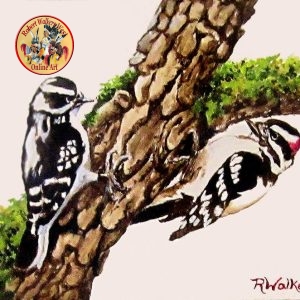
Occasionally I’ll have a void on my easel and nothing in my head, (The empty head happens a lot lately) so if I have some empty canvas/board around the studio, I’ll start painting.
This one turned out to be “Downies”. It’s an original acrylic painting on an 8 X 10 canvas board, and is designed to fit any standard 8 X 10 frame. If you have a “Gallery Wall” in your home, this would be a great addition to it.
Hunters Moon
The full moon that appears in October is called the Hunters Moon. The first moon after the Harvest Moon is the Hunters Moon, so named as the preferred month to hunt summer-fattened deer and fox unable to hide in now bare fields. Like the Harvest Moon, the Hunters Moon is also particularly bright and long in the sky, giving hunters the opportunity to stalk prey at night. Probably because of the threat of winter looming close, the “Hunters Moon” is generally accorded with special honor, historically serving as an important feast day in both Western Europe and among many Native American tribes.
“Hunter’s Moon” is an original acrylic painting on a 16 X 20 inch panel.
I created this original acrylic painting several years ago, just to see if I could. It is a Peregrine Falcon that uses the Trompe’ style that creates the illusion that it is flying out of its’ frame. I’m not sure how successful I was, but here it is.
This is an acrylic painting on a gallery-wrapped 16X20 canvas. It has been framed, but perhaps it might be better if the frame was removed and hung as it is.
Mourning Doves
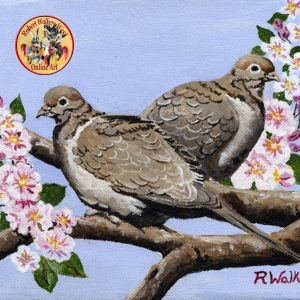
This is “Mourning Doves”. It’s an original acrylic painting on an 8 X 10 gallery-wrapped canvas and can be hung without a frame. It isdesigned to fit any standard 8 X 10 frame. If you have a “Gallery Wall” in your home, this would be a great addition to it.
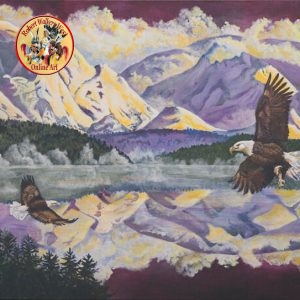
The Eagles of Kachemak Bay in Alaska congregate in this area due to the fact that the lakes of their ‘home territories’ are frozen over. They assemble at this location to feast on the waterfowl that congregate here as well as for the fish in the bay.
This acrylic painting of Bald Eagles in flight over Kachemak Bay, Alaska, is an original acrylic painting on a 36 X 24 inch canvas, and is gallery-wrapped.
Enter your name and email to receive promo code
Select at least 2 products
to compare


Reviews
There are no reviews yet.