
Description
Test Products

Test Products
| Auction started | December 24, 2025 11:28 am | ||
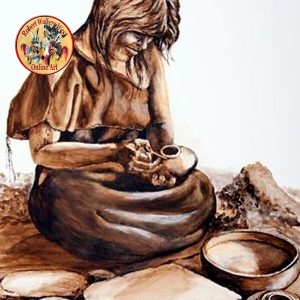
Nampeyo (1859 –1942) was a Hopi-Tewa potter who lived on the Hopi Reservation in Arizona. Her Tewa name was also spelled Num-pa-yu, meaning “snake that does not bite”.She used ancient techniques for making and firing pottery and used designs from “Old Hopi” pottery and sherds found at 15th-century Sikyátki ruins on First Mesa.A world record for Southwest American Indian pottery was declared at Bonhams Auction House in San Francisco on December 6, 2010, when one of Nampeyo’s art works, a decorated ceramic pot, sold for $350,000.
This monocolor is an acrylic painting on a 16X20 gallery-wrapped canvas.
Cheyenne Elder
Between 1900 and 1930, Edward Curtis traveled deep into Indian territories and lived among dozens of Native tribes. He captured the authentic ways of life of over 80 Native cultures. One of his photographs was the reference for this acrylic mono-color. I see this old man, thinking that his way of life that he knew in his early life was gone forever, and would never return.
The size of this original is painted on a 16X20X1 stretched canvas. It is a mono-color using only raw umber acrylic paint
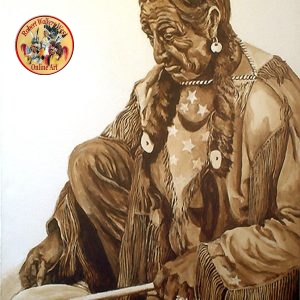
Ghost Drums
The basis for the Ghost Dance is the circle dance, a traditional dance done by many Native Americans. The Ghost Dance was first practiced by the Nevada Northern Paiute in 1889. The practice swept throughout much of the Western United States, quickly reaching areas of California and Oklahoma. As the Ghost Dance spread from its original source, different tribes synthesized selective aspects of the ritual with their own beliefs.
The Ghost Dance was associate(Wovoka’s) prophecy of an end to white expansion while preaching goals of clean living, an honest life, and cross-cultural cooperation by Indians. Practice of the Ghost Dance movement was believed to have contributed to Lakota resistance to assimilation under the Dawes Act.
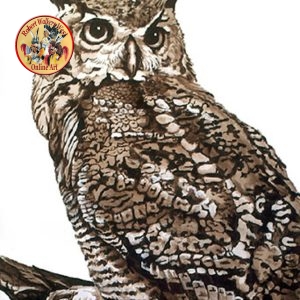
“Hootie”
“Hootie” is an original mono-color acrylic on a 16X20 inch gallery-wrapped canvas. It has been wired and is ready to be hung on your wall.
This painting draws the most attention when hung in a show.
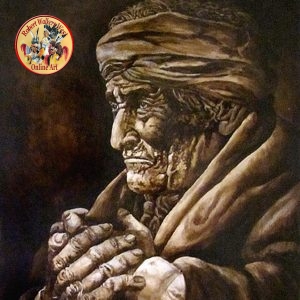
Geronimo was a Bedonkohe Apache leader of the Chiricahua Apache, who led his people’s defense of their homeland against the military might of the United States.
“Geronimo”
Geronimo was an Apache leader who continued the tradition of the Apaches resisting white colonization of their homeland in the Southwest, participating in raids into Sonora and Chihuahua in Mexico. After years of war, Geronimo finally surrendered to U.S. troops in 1886. While he became a celebrity, he spent the last two decades of his life as a prisoner of war.
This 16 X 20 mono-color painting is of Geronimo in his last years, maybe thinking of his days in Arizona, fighting for his tribal lands.
Hunters Moon
The full moon that appears in October is called the Hunters Moon. The first moon after the Harvest Moon is the Hunters Moon, so named as the preferred month to hunt summer-fattened deer and fox unable to hide in now bare fields. Like the Harvest Moon, the Hunters Moon is also particularly bright and long in the sky, giving hunters the opportunity to stalk prey at night. Probably because of the threat of winter looming close, the “Hunters Moon” is generally accorded with special honor, historically serving as an important feast day in both Western Europe and among many Native American tribes.
“Hunter’s Moon” is an original acrylic painting on a 16 X 20 inch panel.
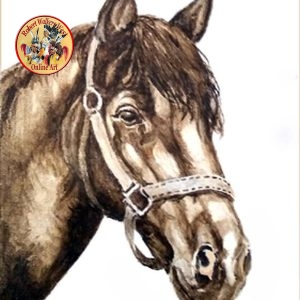
“Horse” SKU-AN06
Occasionally I’ll have a void on my easel and nothing in my head, (The empty head happens a lot lately) so if I have some empty canvas/board around the studio, I’ll start painting.
This one turned out to be “Horse”. Not any particular horse. Just “Horse”.
Description:
It’s an original acrylic painting on an 8 X 10 canvas board and is designed to fit any standard 8 X 10 frame. If you have a “Gallery Wall” in your home, this would be a great addition to it.
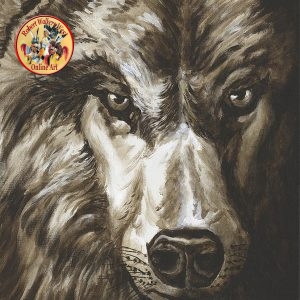
Grandma SKU-AN03
—–And Goldilocks said, “Why Grandma, what big eyes you have! The wolf said, “The better to see you with.”—-and we all know where this is going.
Description:This is an acrylic painting on a 16X20 gallery wrapped canvas. The great part is that the painting is an original, and this means it is a “One-of-a-Kind”. No one else can get one.$450
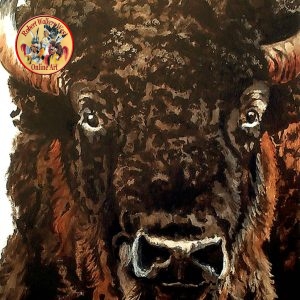
Bison Bull SKU-AN04Truth be told; I had a blank canvas and no clear direction when I painted this. Having said that- – – – Here it is!!!
Description:This is an acrylic painting on a 16X20 gallery wrapped canvas. The great part is that the painting is an original, and this means it is a “One-of-a-Kind”. No one else can get one.$450
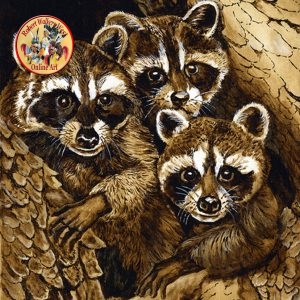
Baby Bunch SKU-AN02
Many years ago, when I was young, (That was just shortly before they invented Dirt.) I lived in the back country, and spent a good deal of my time in the woods with a camera. On one of my forays, I ran across a litter of raccoons waiting for mama to return home to feed them. Apparently she had been delayed for quite some time, and the young coons were not happy about it. As a matter of fact that is how I found them in the first place because they were raising quite a commotion, and I heard them before I saw them.Description:This is an acrylic painting on a 16X20 gallery wrapped canvas. The great part is that the painting is an original, and this means it is a “One-of-a-Kind”. No one else can get one.
$450
Ten Point SKU-AN01
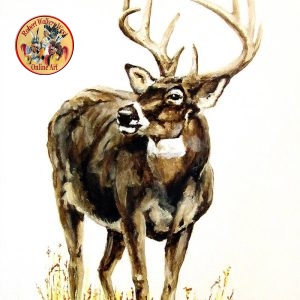
This ten pointer would make a great wall hanging that most hunters wait for all of their lives. This would be a great gift for the “Hunter” that has everything.
Description:
This is an acrylic painting on a 16X20 gallery wrapped canvas. The great part is that the painting is an original, and this means it is a “One-of-a-Kind”. No one else can get one.
$450
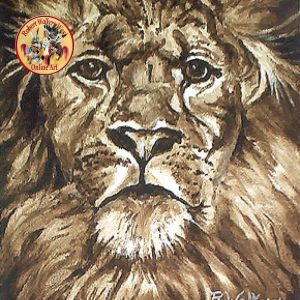
“Lion” SKU-AN06
Occasionally I’ll have a void on my easel and nothing in my head, (The empty head happens a lot lately) so if I have some empty canvas/board around the studio, I’ll start painting.
Description:
It’s an original acrylic painting on an 8 X 10 canvas board and is designed to fit any standard 8 X 10 frame. If you have a “Gallery Wall” in your home, this would be a great addition to it.
Select at least 2 products
to compare

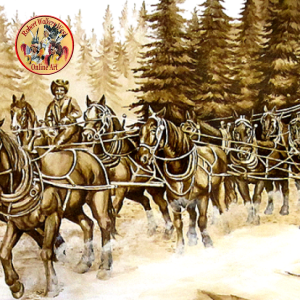 "Ten Horse Team on the Overland Trail"
Reviews
There are no reviews yet.