Original Artwork

$550.00

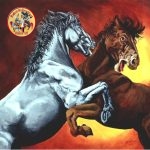
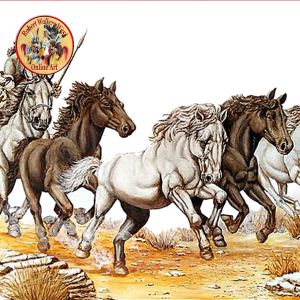
“To the Victor Go the Sorrels”

“To the Victor Go the Sorrels”
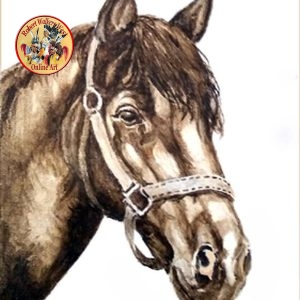
Each herd typically has a dominant stallion referred to as the “herd stallion” and a few other less dominant stallions. Interestingly, each herd is led not by the dominant stallion but by a dominant mare. This is similar to the way we humans do things.
This original acrylic painting by Robert Walker is on a 16X20 gallery-wrapped canvas.
International Shipping: If you are outside the U.S., please contact us directly for a shipping quote.

1 in stock

Description

Description

“To the Victor Go the Sorrels”
Each herd typically has a dominant stallion referred to as the “herd stallion” and a few other less dominant stallions. Interestingly, each herd is led not by the dominant stallion but by a dominant mare. This is similar to the way we humans do things.
This original acrylic painting by Robert Walker is on a 16X20 gallery-wrapped canvas.
Reviews (0)

Reviews

There are no reviews yet.

Be the first to review ““To the Victor Go the Sorrels””

Your email address will not be published. Required fields are marked *

More Products

“Cheyenne Elder”

$650.00

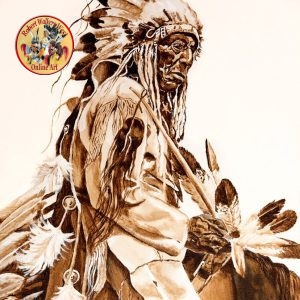
Cheyenne Elder
Between 1900 and 1930, Edward Curtis traveled deep into Indian territories and lived among dozens of Native tribes. He captured the authentic ways of life of over 80 Native cultures. One of his photographs was the reference for this acrylic mono-color. I see this old man, thinking that his way of life that he knew in his early life was gone forever, and would never return.
The size of this original is painted on a 16X20X1 stretched canvas. It is a mono-color using only raw umber acrylic paint

“The Baby Bunch” Original Acrylic Painting on 16X20 Gallery-Wrapped Canvas

$450.00

Baby Bunch SKU-AN02
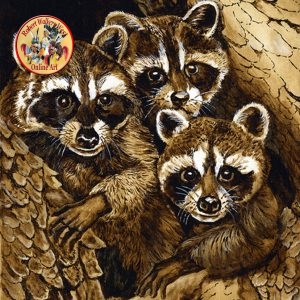
Many years ago, when I was young, (That was just shortly before they invented Dirt.) I lived in the back country, and spent a good deal of my time in the woods with a camera. On one of my forays, I ran across a litter of raccoons waiting for mama to return home to feed them. Apparently she had been delayed for quite some time, and the young coons were not happy about it. As a matter of fact that is how I found them in the first place because they were raising quite a commotion, and I heard them before I saw them.Description:This is an acrylic painting on a 16X20 gallery wrapped canvas. The great part is that the painting is an original, and this means it is a “One-of-a-Kind”. No one else can get one.
$450

“Counting Coupe”

$750.00

“Counting Coupe”
Among the Plains Indians of North America, counting coup involved the winning of prestige against an enemy. Native American warriors won prestige by acts of bravery in the face of the enemy, which could be recorded in various ways and retold as stories. Any blow struck against the enemy counted as a coup, but the most prestigious acts included touching an enemy warrior with a hand, bow, or coup stick.
Counting coup could also involve stealing an enemy’s horses tied up to his lodge in camp. Risk of injury or death was required to count coup. Escaping unharmed while counting coup was considered a higher honor than being wounded in the attempt.
After a battle or exploit, the people of a band would gather together to recount their acts of bravery and “count coup”.

“The Last Hunt”

$1,250.00

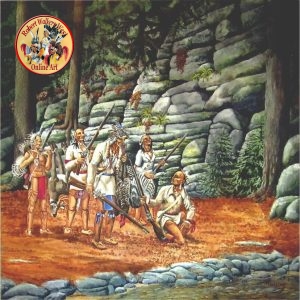
The Last Hunt
Upon arriving in the Ohio Country, the Delaware Tribes formed alliances with Frenchmen engaged in the fur trade. The French provided the natives with European cookware and guns, as well as alcohol, in return for furs. The French and British colonists struggled for control of the Ohio Country beginning in the 1740s, and as the British gained control of the Ohio Country, the Delawares chose to ally themselves with the stronger party. This was the case until the French abandoned all of their North American colonies to Britain. The Delawares thereafter remained loyal to the British and the American colonists until the American Revolution.
“The Last Hunt” depicts a hunting party of Delaware Indians in their final days before they were displaced to the Oklahoma Territory. The old chief and his party are having a good hunt in what is now the Mohican State Park in Ohio. It will be their “Last Hunt before their way of life changes forever.
This acrylic painting is on a 36 X 36 X 1 gallery-wrapped canvas, and may be hung without framing.

“Downie Pair”

$125.00

Downies
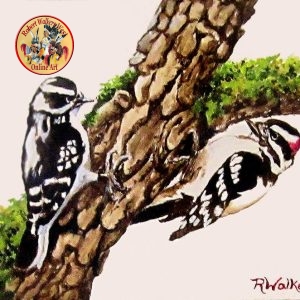
Occasionally I’ll have a void on my easel and nothing in my head, (The empty head happens a lot lately) so if I have some empty canvas/board around the studio, I’ll start painting.
This one turned out to be “Downies”. It’s an original acrylic painting on an 8 X 10 canvas board, and is designed to fit any standard 8 X 10 frame. If you have a “Gallery Wall” in your home, this would be a great addition to it.

“Big Horn” Original acrylic on an 8X10 canvas board

$125.00

Big Horn Sheep SKU-AN05
The bighorn sheep is a species of sheep native to North America. It is named for its large horns. A pair of horns might weigh up to 30 pounds, and the sheep typically weigh up to 315 lbs. The sheep originally crossed into North America over the Bering Land Bridge from Siberia. The population in North America peaks in the millions, and the bighorn sheep entered into the mythology of Native Americans.
The Sheep Eaters (named after their staple diet), or “Tukudeka”, lived high in mountain fastnesses favored also by the bighorn sheep they ate. They were a branch of the Shoshone. Both Indians and sheep found a precarious niche in rugged mountain country at higher altitudes.
Description:
It’s an original acrylic painting on an 8 X 10 canvas board and is designed to fit any standard 8 X 10 frame. If you have a “Gallery Wall” in your home, this would be a great addition to it.